American National Standards Institute eStandards Store Home page Shopping Cart Alert me My account Download Frequently asked questions Terms Of Use Help
ANSI Standards Store ANSI Standards Store
AAMI - Medical Device Standards SIA - Scaffold Standards NEMA - Electrical Standards BSI - British Standards Institution ASTM International Standards DIN - German Institute for Standardization ISO Environmental Management Standards
Browse Standards

Browse ISO Standards
Browse IEC Standards

View all publishers


View All Standards Packages

Bookmark and Share
 
ANSI Blog    Follow ANSI on Twitter    Follow ANSI on Youtube
Follow ANSI on LinkedIn    Follow ANSI on Google Plus    Follow ANSI on Facebook
Get Adobe Acrobat Reader
Get File Open Plug-In
 
 Document Number  Keyword   News  
Search Tips
 

Hydrodynamic Noise Safety Standards

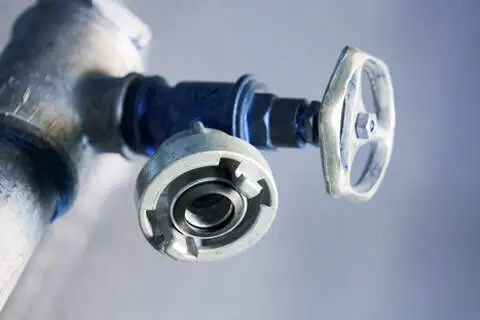
Hydrodynamic Noise Safety Standards Hydrodynamic Noise Safety Standards deal with noise generated by the movement of liquids or gases through valves, pipes, and other associated configurations. The standards address specific methods of measurement, including the underlying assumptions and environments in which these methods are applicable. Hydrodynamic noise safety standards are used heavily in industrial and laboratory environments, as well as for shipboard systems.

go back to Machine Risk standards Noise Safety Standards home


BS 5944-4:1984
Measurement of airborne noise from hydraulic fluid power systems and components. Method of determining sound power levels from valves controlling flow and pressure (British Standard)


BS EN 60534-8-1:2005
Industrial-process control valves. Noise considerations. Laboratory measurement of noise generated by aerodynamic flow through control valves (British Standard)


BS EN 60534-8-2:1993
Industrial-process control valves. Noise considerations. Laboratory measurement of noise generated by hydrodynamic flow through control valves (British Standard)


BS EN 60534-8-3:2011
Industrial-process control valves. Noise considerations. Control valve aerodynamic noise prediction method (British Standard)


BS EN 60534-8-4:2005
Industrial-process control valves. Noise considerations. Prediction of noise generated by hydrodynamic flow (British Standard)


IEC 60534-8-1 Ed. 2.0 b:2005
Industrial-process control valves - Part 8-1: Noise considerations - Laboratory measurement of noise generated by aerodynamic flow through control valves
Defines equipment, methods, and procedures for obtaining laboratory measurements of sound pressure levels radiated by control valves and/or associated piping configurations, including fixed restrictions, through which compressible fluids are passing. Control valves discharging to atmosphere are excluded from this standard


IEC 60534-8-2 Ed. 2.0 b:2011
Industrial-process control valves - Part 8-2: Noise considerations - Laboratory measurement of noise generated by hydrodynamic flow through control valves
IEC 60534-8-2:2011 includes the method for measuring the sound pressure level due to liquid flow through a control valve and the method for determining the characteristic increase of noise due to the onset of cavitation. It also defines the equipment, methods and procedures for the laboratory measurement of the airborne sound needed to determine these characteristics. Two methods are provided for testing the noise generating characteristics of control valves. The first is a uniform method of measuring the radiated noise from the valve and the associated test piping including fixed flow restrictions through which the test fluid (water) is passing. The second is a procedure for measuring the sound pressure levels within pipe systems upstream and downstream of the valve under fixed operating conditions. This second edition cancels and replaces the first edition published in 1991 and constitutes a technical revision that includes internal noise measurement.


IEC 60534-8-3 Ed. 3.0 b:2010
Industrial-process control valves - Part 8-3: Noise considerations - Control valve aerodynamic noise prediction method
IEC 60534-8-3:2010 establishes a theoretical method to predict the external sound-pressure level generated in a control valve and within adjacent pipe expanders by the flow of compressible fluids. This method considers only single-phase dry gases and vapours and is based on the perfect gas laws. It is assumed that the downstream piping is straight for a length of at least 2 m from the point where the noise measurement is made. The method is applicable to the following single-stage valves: - globe (straight pattern and angle pattern), - butterfly, - rotary plug (eccentric, spherical), - ball, and - valves with cage trims. Specifically excluded are the full bore ball valves where the product FpC exceeds 50 % of the rated flow coefficient. This third edition cancels and replaces the second edition published in 2000. This edition constitutes a technical revision. The significant technical changes with respect to the previous edition are as follows: - predicting noise as a function of frequency; - using laboratory data to determine the acoustical efficiency factor.


IEC 60534-8-4 Ed. 2.0 b Cor.1:2006
Corrigendum 1 - Industrial-process control valves - Part 8-4: Noise considerations - Prediction of noise generated by hydrodynamic flow


IEC 60534-8-4 Ed. 2.0 b:2005
Industrial-process control valves - Part 8-4: Noise considerations - Prediction of noise generated by hydrodynamic flow
Establishes a method to predict the noise generated in a control valve by liquid flow and the resulting noise level measured downstream of the valve and outside of the pipe.


ISA 75.17-1989
Control Valve Aerodynamic Noise Prediction (Downloadable)
This standard establishes a method to predict the noise generated in a control valve of standard design by the flow of compressible fluid and the resulting noise outside of the pipe and downstream of the valve. The transmission loss (TL) equations are based on a rigorous analysis of the interaction between the sound waves that exist in the pipe and the many coincidence frequencies in the pipe wall. Commercial pipe specifications allow a relatively wide tolerance in pipe wall thickness. This limits the value of the very complicated mathematical methods required for a rigorous analysis; calculations prove that a simplified expression is justified. The equations in this standard make use of the valve sizing factors defined in ANSI/ISA-75.01.01-2007 and ANSI/ISA-75.02.01-2008. This method was developed from the fundamental principles of acoustics, fluid mechanics, and mechanics. The standard addresses only aerodynamic noise and does not consider noise generated by mechanical vibrations, unstable flow patterns, and other unpredictable behavior.


ISA S75.07-1997
Laboratory Measurement of Aerodynamic Noise Generated by Control Valves


JIS B 2005-8-2:2008
Industrial-process control valves -- Part 8: Noise considerations -- Section 2: Laboratory measurement of noise generated by hydrodynamic flow through control valves (Foreign Standard)


JIS B 2005-8-3:2008
Industrial-process control valves -- Part 8-3: Noise considerations -- Control valve aerodynamic noise prediction method (Foreign Standard)


JIS B 2005-8-4:2008
Industrial-process control valves -- Part 8-4: Noise considerations -- Prediction of noise generated by hydrodynamic flow (Foreign Standard)


OVE/ONORM EN 60534-8-3:2011
Industrial-process control valves - Part 8-3: Noise considerations - Control valve aerodynamic noise prediction method (IEC 60534-8-3:2010) (english version)


SAE J 1782-2006 (SAE J1782-2006)
Ship Systems and Equipment~Hydraulic Systems~Noise Control
Hydraulic systems are used on marine vehicles for steering, vehicle control, and utility services. System components that generate and transmit noise are of concern. This SAE Information Report (a) addresses noise requirements which may apply to the hydraulic systems of ships and submersibles, and (b) identifies noise sources and techniques which may be used to reduce system noise. Noise of power sources (e.g., electric motors) and end items (e.g., steering linkages) is beyond the scope of this document.


  Find
 
GlobalSpec - The Engineering Search Engine


ANSI Copyright
eStandards Store home page Cart Alert Account Download Frequently Asked Questions Privacy Policy Contact Us Help