PDF Price
$41.00
Add to cart
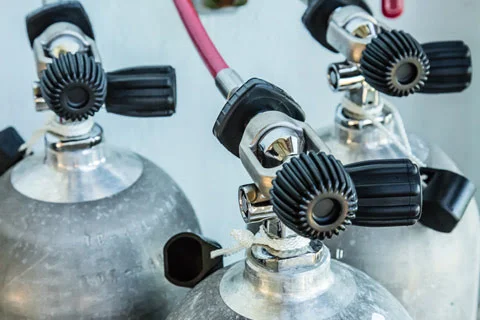
Aluminum alloy gas cylinder standards collectively provide a comprehensive framework for the design, material compatibility, inspection, and requalification of gas cylinders and tubes used in industrial, transportation, and fuel applications. The ISO 11114 series addresses the compatibility of metallic and non-metallic materials with gases, including specific test methods for ignition in oxygen atmospheres and resistance to hydrogen embrittlement, while ISO 11120 and ISO 7866 define design and construction requirements for large seamless steel tubes and seamless aluminum alloy cylinders, respectively. ISO 18119 establishes requirements for periodic inspection and testing of seamless steel and aluminum cylinders and tubes to ensure continued safe use. Complementing these, the CGA C-6.1 and C-6.3 standards provide detailed guidelines for the visual inspection and requalification of aluminum cylinders, distinguishing between high- and low-pressure applications, with C-6.3 specifically cited by DOT. Together, these standards and guidelines ensure the safe design, manufacture, compatibility assessment, and lifecycle maintenance of compressed gas containers.
This position statement provides a comparison between tapered and parallel (straight) threads for use in aluminum alloy cylinders.
This document specifies the requirements for periodic inspection and testing to verify the integrity for further service of hoop-wrapped and fully-wrapped composite transportable gas cylinders and tubes, with aluminium-alloy, steel or non-metallic liners or of linerless construction (Types 2, 3, 4, and 5), intended for compressed, liquefied or dissolved gases under pressure, of water capacity from 0,5 l up to 3 000 l.
This document addresses the periodic inspection and testing of composite cylinders and tubes constructed according to ISO 11119-1, ISO 11119-2, ISO 11119-3, ISO 11119-4 or ISO 11515. It can be applied to other composite cylinders and tubes designed to comparable standards when authorized by the competent authority. As far as practicable, this document can also be applied to cylinders of less than 0,5 l water capacity when authorized by the manufacturer.
NOTE Unless noted by exception, the use of the word “cylinder” in this document refers to both cylinders and tubes.
This document specifies minimum requirements for the material, design, construction and workmanship, manufacturing processes, examination and testing at time of manufacture for:
— type 3 fully wrapped cylinders or tubes with a load-sharing metal liner and composite reinforcement on both the cylindrical portion and the dome ends;
— water capacities up to 450 l;
— storage and conveyance of compressed or liquefied gases;
— cylinders and tubes with composite reinforcement of carbon fibre, aramid fibre or glass fibre (or a mixture thereof) within a matrix;
— a minimum design life of 15 years.
This document does not address the design, fitting, and performance of removable protective sleeves.
This document does not apply to cylinders with welded liners.
NOTE 1 References to cylinders in this document include composite tubes if appropriate.
NOTE 2 ISO 11439 applies to cylinders intended for use as fuel containers on natural gas vehicles and ISO 11623 covers periodic inspection and re-testing of composite cylinders.
ISO 11439:2013 specifies minimum requirements for light-weight refillable gas cylinders intended only for the on-board storage of high pressure compressed natural gas as a fuel for automotive vehicles to which the cylinders are to be fixed. The service conditions do not cover external loadings that can arise from vehicle collisions, etc.
ISO 11439:2013 covers cylinders of any seamless steel, seamless aluminium alloy or non-metallic material construction, using any design or method of manufacture suitable for the specified service conditions. It does not cover cylinders of stainless steel.
ISO 11439:2013 uses 200 bar as a reference working pressure, but other working pressures can be used.
Cylinders covered by ISO 11439:2013 are designated Type 1, Type 2, Type 3 and Type 4.
ISO 7866:2012 specifies minimum requirements for the material, design, construction and workmanship, manufacturing processes and tests at time of manufacture of refillable seamless aluminium alloy gas cylinders of water capacities up to and including 150 litres for compressed, liquefied and dissolved gases for worldwide use (normally up to +65 °C).
ISO 11120:2015 specifies minimum requirements for the material, design, construction and workmanship, manufacturing processes, examinations and tests at manufacture of refillable quenched and tempered seamless steel tubes of water capacities exceeding 150 l up to and including 3 000 l for compressed and liquefied gases exposed to extreme world-wide ambient temperatures, normally between ?50 °C and 65 °C.
ISO 11120:2015 is applicable to tubes with a maximum tensile strength, Rma, of less than 1 100 MPa. These tubes can be used alone or in batteries to equip trailers or multiple element gas containers (ISO modules or skids) for the transportation and distribution of compressed gases.
ISO 11120:2015 is applicable to tubes having an opening at each end.
This document specifies the requirements for periodic inspection and testing to verify the integrity of cylinders and tubes to be re-introduced into service for a further period of time.
This document is applicable to seamless steel and seamless aluminium-alloy transportable gas cylinders (single or those that comprise a bundle) intended for compressed and liquefied gases under pressure, of water capacity from 0,5 l up to 150 l and to seamless steel and seamless aluminium-alloy transportable gas tubes (single or those that comprise a bundle) intended for compressed and liquefied gases under pressure, of water capacity greater than 150 l. It also applies, as far as practical, to cylinders of less than 0,5 l water capacity.
This document does not apply to the periodic inspection and maintenance of acetylene cylinders or to the periodic inspection and testing of composite cylinders.
NOTE Unless noted by exception, the use of the word "cylinder" in this document refers to both cylinders and tubes.

This publication applies to high pressure, seamless refillable aluminum alloy cylinders. While not addressed in this publication, a heat indicating system can also be used on refillable low pressure, aluminum alloy cylinders.
This publication provides recommended guidelines for developing procedures for valve installation into high pressure aluminum alloy cylinders for thread designs developed in the United States. For guidance on devalving cylinders, see CGA P-38, Guideline for Devalving Cylinders [1].1
This publication provides guidelines to assist in the selection of a PRD for a cylinder with UN stamp markings and the selection of a CGA valve outlet for a cylinder with UN stamp markings. It is important to note that some UN marked cylinders may also be marked with U.S. Department of Transportation (DOT) and/or Transport Canada (TC) markings. This publication also applies to the determination of specific setting of PRDs on comparable DOT specification and UN marked cylinders. It also details the proper stamp marking that needs to be on the PRD. This publication applies to high pressure seamless steel and aluminum alloy cylinders. This publication does not apply to CGA valve outlets on manifolded cylinders and tubes or to tubes.
This publication provides information and procedures for the periodic visual examination and inspection of natural gas and hydrogen fuel containers and the condition of the installation. These containers are installed in vehicles qualified by the original equipment manufacturer (OEM) or aftermarket vehicle manu-facturer to meet the following U.S. or Canadian standards: CSA/ANSI NGV2, Compressed natural gas vehicle fuel containers; CSA/ANSI HGV 2, Compressed hydrogen gas vehicle fuel containers; U.S. Department of Transportation (DOT) National Highway Traffic Safety Administration (NHTSA) FMVSS, Standard No. 304, Compressed Natural Gas Fuel Container Integrity; Canadian Motor Vehicle Safety Regulations, Standard 301.2, CNG Fuel System Integrity; and Canadian Standards Association (CSA) B51, Boiler, Pressure Vessel, and Pressure Piping Code. The purpose of this publication is to provide guidance for the visual inspection of these containers and to provide criteria for the acceptance or rejection (in the absence of guidance from the manufacturer) with subsequent disposal or repair as necessary.
Pressure testing of compressed gas cylinders is required for many newly manufactured cylinders and also is an accepted test method for the requalification of cylinders. This standard contains operating and equipment requirements necessary to properly perform pressure testing of compressed gas cylinders. Tests include the water jacket method, direct expansion method, and proof pressure method. NOTE - For purposes of this standard, cylinder(s) also means tubes unless otherwise stated. Previous edition cited by DOT.
This standard identifies and describes the various acceptable UT methods (also known as ultrasonic examination [UE] methods) that may be used in place of internal visual inspection and hydrostatic requalification methods used to examine certain metallic, U.S. Department of Transportation (DOT)/Transport Canada (TC) 3-series gas cylinders and tubes as mandated by Title 49 of the U.S. Code of Federal Regulations (49 CFR) and TC’s Transportation of Dangerous Goods Regulations, and cylinders manufactured under certain DOT special permits or TC equivalency certificates. This standard also specifies the allowable flaw ac-ceptance/rejection criteria to be used. This standard may also be applied to other seamless steel and aluminum alloy cylinders and tubes when authorized by the regulatory authority. Aluminum alloy cylinders susceptible to sustained load cracking such as those manufactured from 6351 aluminum alloy shall also have the shoulder and neck area internally visually inspected and an eddy current examination of neck threads completed in accordance with established regulatory requirements. This standard does not address any safety, health, or environmental considerations associated with UT or regulations and codes. Operating procedures and processes regarding worker safety precautions and requirements shall be met. See additional references in Section 13.
This standard has been prepared for the visual inspection of aluminum alloy compressed gas cylinders with service pressures of 1800 psi (12 410 kPa) or greater.
The document specifies the inspection requirements at the time of filling and applies to seamless or welded transportable gas cylinders made of steel or aluminium alloy for compressed gases (excluding acetylene) of water capacity from 0,5 litre up to 150 litres. It also applies, as far as practicable, to cylinders of less than 0,5 litre water capacity. It does not apply to manifold bundles or manifolded trailer cylinders.
This standard addresses the techniques for the inspection and requalification of composite overwrapped high pressure cylinders. The use of this standard is required in the United States by Title 49 of the U.S. Code of Federal Regulations (49 CFR) Part 180.205(f)(1) and in Canada by CSA B339, Clause 24 [6, 4]. The requalification consists primarily of an internal and external visual inspection followed by hydrostatic testing. This standard highlights those items that are essential for an accurate appraisal of a composite overwrapped cylinder for compressed gas service. For information on requirements of general cylinder inspection and requalification (visual inspection and hydrostatic testing), refer to the publications listed in Section 4.
This publication covers the periodic inspection of aluminum alloy compressed gas cylinders with service pressures of 500 psi (35 bar) or less. This publication may not cover all circumstances for each individual cylinder type or lading. Inspection agencies may find it necessary to amplify these requirements to fit their condition of service if the service is more severe than encountered in transportation