PDF Price
$345.00
ADD TO CART
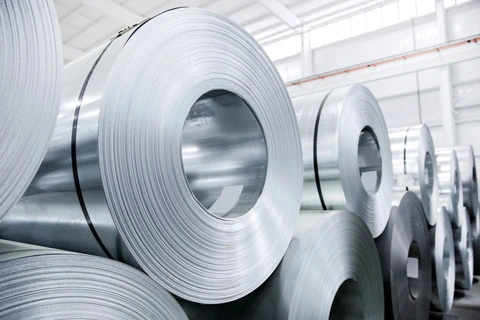
General Aluminum Standards define base alloy systems, dimensions, and general mill product tolerances used across industries. These standards provide specifications for aluminum mill products, sheet, plate, tubes, bars, rods, wires and pipes. They define designation systems and nomenclature and are a comprehensive guide for producers and users of aluminum.
Aluminum Standards and Data is the oldest, most popular and most comprehensive guide for producers and users of aluminum. This 250+ page book was created to make aluminum standards more accessible and understandable for people in the aluminum industry and those sourcing or specifying aluminum. Changes to the 2024 version, which supersedes the previous 2017 edition include: - Latest ANSI H35.1, H35.2 and H35.2(M) updates - Introduction of the designation system for aluminum alloys in powder form - New and updated terminology - New alloy temper properties - Expansion of multiple tolerance tables to higher thickness ranges and gauges - Updates to several footnotes, introduction of new illustrations, and more The book is divided into three parts distinguished by their page colors: blue, yellow and white The blue section contains information on aluminum characteristics, alloy and temper designations, mill product specifications, nominal composition , typical mechanical and physical properties, density calculation procedure, comparative characteristics and application, fabrication/heat treatments of wrought aluminum and wrought aluminum alloy products, and quality control and guidelines for testing, inspection, and identification. The yellow section lists the terminology associated with wrought aluminum products. The white pages cover standard limits for mechanical properties dimensional tolerances for wrought aluminum mill products. The publication is available both in two editions – one for U.S. customary units and one for metric units.
The 2024 edition is a reaffirmation of the 2017 edition. This standard covers the system for designating aluminum hardeners used primarily for the addition of alloy or grain refining elements or modifiers to aluminum alloy melts.
The 2024 edition is a reaffirmation of the 2017 edition. This standard provides a system for designating unalloyed aluminum not made by a refining process and used primarily for remelting.
The 2024 edition of American National Standard Dimensional Tolerances for Aluminum Mill Products - Metric supersedes the 2017 edition. This manual contains useful information and data pertaining to chemical composition limits, mechanical and physical properties, tolerances and other characteristics of various aluminum and aluminum alloy wrought products in metric units. This latest revision consists of numerous changes and corrections including expansion of sheet and plate tolerances thickness ranges, changes to extruded wire, rod and bar tolerances tolerance selection columns and expansion of dimensional tolerance footnote 8 with example and illustrations, additional illustration exemplifying open-space dimensions for extrusions, changes to O tempers in chapter 12 Tube and Pipe, modification of several general footnotes, expansion of table 12.55 Diameter, Wall Thicknesses, Weights – Pipe, and more. This is the edition in metric units
Temper Designation Systems for Aluminum, American National Standard H35.1/H35.1(M). It includes identification of the matrix composition and the type, volume percent and composition of the reinforcement material.
1.1 This specification 2 covers aluminum and aluminum-alloy drawn seamless tubes in straight lengths and coils for general purpose and pressure applications in alloys ( Note 2 ), tempers, and thicknesses shown in Table 2 [ Table 3 ] . Coiled tubes are generally available only as round tubes with a wall thickness not exceeding 0.083 in. [2.00 mm] and only in non-heat-treatable alloys. 1.2 Alloy and temper designations are in accordance with ANSI H35.1/H35.1M. The equivalent Unified Numbering System alloy designations are those of Table 1 preceded by A9, for example, A91100 for aluminum designation 1100 in accordance with Practice E527 . Note 1: See Specification B483/B483M for aluminum-alloy drawn tubes for general purpose applications; Specification B234 for aluminum-alloy drawn seamless tubes for condensers and heat exchangers; and Specification B241/B241M for aluminum-alloy seamless pipe and seamless extruded tube. Note 2: Throughout this specification, use of the term alloy in the general sense includes aluminum as well as aluminum alloy. 1.3 For acceptance criteria for inclusion of new aluminum and aluminum alloys in this specification, see Annex A2 . 1.4 This standard does not purport to address all of the safety concerns, if any, associated with its use. It is the responsibility of the user of this standard to establish appropriate safety, health, and environmental practices and determine the applicability of regulatory limitations prior to use. 1.5 This international standard was developed in accordance with internationally recognized principles on standardization established in the Decision on Principles for the Development of International Standards, Guides and Recommendations issued by the World Trade Organization Technical Barriers to Trade (TBT) Committee.
1.1 This specification 2 covers rolled or cold-finished bar, rod, and wire in alloys ( Note 1 ) and tempers as shown in Table 2 [ Table 3 ]. Note 1: Throughout this specification use of the term alloy in the general sense includes aluminum as well as aluminum alloy. Note 2: The term cold finished is used to indicate the type of surface finish, sharpness of angles, and dimensional tolerances produced by drawing through a die. Note 3: See Specification B221 [ B221M ] for aluminum and aluminum-alloy extruded bars, rods, wire, shapes, and tubes; and Specification B316/B316M for aluminum and aluminum-alloy rivet and cold-heading wire and rods. 1.2 Alloy and temper designations are in accordance with ANSI H35.1/H35.1M. The equivalent UNS alloy designations shall be in accordance with Practice E527 . 1.3 For acceptance criteria for inclusion of new aluminum and aluminum alloys in this specification, see Annex A2 . 1.4 This international standard was developed in accordance with internationally recognized principles on standardization established in the Decision on Principles for the Development of International Standards, Guides and Recommendations issued by the World Trade Organization Technical Barriers to Trade (TBT) Committee.
1.1 This specification 2 covers aluminum and aluminum"“alloy seamless pipe and seamless extruded round tube in the alloys and tempers shown in Table 1 [Table 2] intended for pressure applications. The standard sizes for seamless pipe are listed in Table 16.7 of ANSI H35.2 and H35.2(M). Nonstandard alloys, tempers, and sizes of pipe are produced as seamless extruded tube. Also included in this standard are seamless extruded pipe and seamless extruded tube for Oil Gas Transmission previously covered under Specification B345/B345M . Note 1: Throughout this specification, use of the term alloy, in the general sense, includes aluminum as well as aluminum alloy. Note 2: For drawn seamless tubes, see Specification B210/B210M ; for extruded tubes, Specifications B221 and B221M ; for drawn seamless tubes for condensers and heat exchangers, Specifications B234 and B234M ; for seamless condenser and heat exchanger tubes with integral fins, Specification B429/B429M ; and for drawn tube for general purpose applications, Specification B483/B483M . 1.2 Alloy and temper designations are in accordance with ANSI H35.1/H35.1(M). The equivalent Unified Numbering System alloy designations are those of Table 4 preceded by A9, for example, A91100 for aluminum 1100 in accordance with Practice E527 . 1.3 For acceptance criteria for inclusion of new aluminum and aluminum alloys in this specification, see Annex A2 . 1.4 The values stated in either SI units or inch-pound units are to be regarded separately as standard. The values stated in each system may not be exact equivalents; therefore, each system shall be used independently of the other. Combining values from the two systems may result in non-conformance with the standard. 1.4.1 The SI units are shown either in brackets or in separate tables. 1.5 This international standard was developed in accordance with internationally recognized principles on standardization established in the Decision on Principles for the Development of International Standards, Guides and Recommendations issued by the World Trade Organization Technical Barriers to Trade (TBT) Committee.
1.1 This specification 2 covers extruded 6061-T6 aluminum-alloy standard structural profiles. 1.2 The profiles are limited to I-beams, H-beams, channels, angles, tees, and zees. Note 1: For other extruded profiles in other alloys and tempers refer to Specification B221 . 1.3 Alloy and temper designations are in accordance with ANSI H35.1/H35.1(M). The equivalent Unified Numbering System alloy designation is that in Table 1 preceded by A9, or A96061 for alloy 6061 in accordance with Practice E527 . 1.4 For acceptance criteria for inclusion of new aluminum and aluminum alloys in this specification, see Annex A2 . 1.5 The values stated in either SI units or inch-pound units are to be regarded separately as standard. The values stated in each system may not be exact equivalents; therefore, each system shall be used independently of the other. Combining values from the two systems may result in non-conformance with the standard. 1.6 This standard does not purport to address all of the safety concerns, if any, associated with its use. It is the responsibility of the user of this standard to establish appropriate safety, health, and environmental practices and determine the applicability of regulatory limitations prior to use. 1.7 This international standard was developed in accordance with internationally recognized principles on standardization established in the Decision on Principles for the Development of International Standards, Guides and Recommendations issued by the World Trade Organization Technical Barriers to Trade (TBT) Committee.
1.1 This specification covers aluminum-alloy rolled flat tread plate, mill-finish, with a raised pattern on one side, in the alloy, tempers, and thicknesses shown in Table 1 and Table 2 [ Table 3 ]. 1.2 Alloy and temper designation are in accordance with ANSI H35.1/H35.1M. The equivalent Unified Numbering System alloy designation shall be in accordance with Practice E527 . 1.3 For acceptance criteria for inclusion of new aluminum and aluminum alloys in this specification, see Annex A2 . 1.4 The values stated in either inch-pound or SI units are to be regarded separately as standard. The SI units are shown either in brackets or in separate tables. The values stated in each system are not exact equivalents; therefore, each system must be used independently of the other. Combining values from the two systems will result in nonconformance with the specification. 1.5 This international standard was developed in accordance with internationally recognized principles on standardization established in the Decision on Principles for the Development of International Standards, Guides and Recommendations issued by the World Trade Organization Technical Barriers to Trade (TBT) Committee.
1.1 This specification 2 covers aluminum and aluminum-alloy flat sheet, coiled sheet, and plate in the alloys ( Note 1 ) and tempers shown in Tables 2, 3, 4, and 5, and in the following finishes: 1.1.1 Plate in all alloys and sheet in heat-treatable alloys: mill finish. 1.1.2 Sheet in nonheat-treatable alloys: mill finish, one-side bright mill finish, standard one-side bright finish, and standard two-sides bright finish. 1.2 Alloy and temper designations are in accordance with ANSI H35.1/H35.1M. The equivalent Unified Numbering System alloy designations are those of Table 1 preceded by A9, for example, A91100 for aluminum 1100 in accordance with Practice E527 . Note 1: Throughout this specification, use of the term alloy in the general sense includes aluminum as well as aluminum alloy. Note 2: See Specification B632/B632M for tread plate. Note 3: See Specification B928/B928M for 5xxx-H116 and 5xxx-H321 aluminum alloys containing 3 % or more nominal magnesium and intended for marine service and similar environments. Other alloy-temper products listed in this specification, which do not require the additional corrosion testing/capability called out in Specification B928/B928M , may be suitable for marine and similar environment applications. 1.3 For acceptance criteria for inclusion of new aluminum and aluminum alloys in this specification, see Annex A2 . 1.4 The values stated in either SI units or inch-pound units are to be regarded separately as standard. The values stated in each system are not necessarily exact equivalents; therefore, to ensure conformance with the standard, each system shall be used independently of the other, and values from the two systems shall not be combined. 1.5 This standard does not purport to address all of the safety concerns, if any, associated with its use. It is the responsibility of the user of this standard to establish appropriate safety, health, and environmental practices and determine the applicability of regulatory limitations prior to use. 1.6 This international standard was developed in accordance with internationally recognized principles on standardization established in the Decision on Principles for the Development of International Standards, Guides and Recommendations issued by the World Trade Organization Technical Barriers to Trade (TBT) Committee.
The 2024 edition of American National Standard Dimensional Tolerances for Aluminum Mill Products supersedes the 2017 edition. This manual contains useful information and data pertaining to chemical composition limits, mechanical and physical properties, tolerances and other characteristics of various aluminum and aluminum alloy wrought products. This latest revision consists of numerous changes and corrections including expansion of sheet and plate tolerances thickness ranges, changes to extruded wire, rod and bar tolerances tolerance selection columns and expansion of dimensional tolerance footnote 8 with example and illustrations, additional illustration exemplifying open-space dimensions for extrusions, changes to O tempers in chapter 12 Tube and Pipe, modification of several general footnotes, expansion of table 12.55 Diameter, Wall Thicknesses, Weights – Pipe, and more.
Aluminum Standards and Data is the oldest, most popular and most comprehensive guide for producers and users of aluminum. This 250+ page book was created to make aluminum standards more accessible and understandable for people in the aluminum industry and those sourcing or specifying aluminum. Changes to the 2024 version, which supersedes the previous 2017 edition include: - Latest ANSI H35.1, H35.2 and H35.2(M) updates - Introduction of the designation system for aluminum alloys in powder form - New and updated terminology - New alloy temper properties - Expansion of multiple tolerance tables to higher thickness ranges and gauges - Updates to several footnotes, introduction of new illustrations, and more The book is divided into three parts distinguished by their page colors: blue, yellow and white The blue section contains information on aluminum characteristics, alloy and temper designations, mill product specifications, nominal composition , typical mechanical and physical properties, density calculation procedure, comparative characteristics and application, fabrication/heat treatments of wrought aluminum and wrought aluminum alloy products, and quality control and guidelines for testing, inspection, and identification. The yellow section lists the terminology associated with wrought aluminum products. The white pages cover standard limits for mechanical properties dimensional tolerances for wrought aluminum mill products. The publication is available both in two editions – one for U.S. customary units and one for metric units.
The 2024 edition of American National Standard Alloy & Temper Designation Systems for Aluminum supersedes the 2017 edition. The latest 2024 edition includes the introduction of the designation system for aluminum powders and aluminum alloy powders, and revisions to the exceptions to the criteria governing chemical composition limits for xxx.2 ingots.