PDF Price
$168.00
ADD TO CART
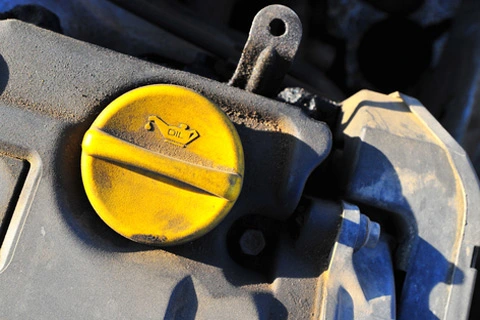
Automotive engine oil standards primarily deal with standard test methods for the evaluation and determination of engine oils and their properties, and the measurements of their effects on metrics such as fuel economy. Because different engine oils are to be used with different types of engines, and a single engine will be exposed to different usage scenarios, standards for engine oils guide compatibility between engine oils, engines types, and engine fuels.
This SAE Information Report lists engine and laboratory tests for service fill engine oils which are associated with specifications and classifications established outside of SAE J304 and SAE J183. These specifications and classifications include those developed prior to April 1, 2017, by international technical societies, as well as individual original equipment manufacturers. The information contained within this report applies to engine oils utilized in gasoline- and diesel-powered automotive vehicles.
1.1 This test method covers an engine test procedure for the measurement of the effects of automotive engine oils on the fuel economy of passenger cars and light-duty trucks with gross vehicle weight 3856 kg or less. The tests are conducted using a specified spark-ignition engine with a displacement of 3.6 L (General Motors) 4 on a dynamometer test stand. It applies to multi viscosity grade oils used in these applications. 1.2 The values stated in SI units are to be regarded as standard. No other units of measurement are included in this standard. 1.2.1 Exceptions - Where there is no direct equivalent such as the units for screw threads, National Pipe threads/diameters, tubing size, and single source supply equipment specifications. Additionally, Brake Fuel Consumption (BSFC) is measured in kilograms per kilowatthour. 1.3 This standard does not purport to address all of the safety concerns, if any, associated with its use. It is the responsibility of the user of this standard to establish appropriate safety, health, and environmental practices and determine the applicability of regulatory limitations prior to use. 1.4 This test method is arranged as follows: 1.5 This international standard was developed in accordance with internationally recognized principles on standardization established in the Decision on Principles for the Development of International Standards, Guides and Recommendations issued by the World Trade Organization Technical Barriers to Trade (TBT) Committee.
1.1 This test method covers an engine test procedure for the measurement of the effects of automotive engine oils on the fuel economy of passenger cars and light-duty trucks with gross vehicle weight of 3856 kg or less. The tests are conducted on a dynamometer test stand using a specified spark-ignition engine with a displacement of 4.6-L. It applies to multiviscosity grade oils used in these applications. 1.2 This test method also provides for the running of an abbreviated length test that is referred to as the VIBSJ. The procedure for VIBSJ is identical to the Sequence VIB with the exception of the items specifically listed in Annex A13 . The procedure modifications listed in Annex A13 refer to the corresponding section of the Sequence VIB test method. 1.3 The values stated in SI units are to be regarded as standard. No other units of measurement are included in this standard. 1.3.1 Exceptions Where there is no direct SI equivalent such as screw threads, National Pipe Threads/diameters, tubing size, or single source supply equipment specifications. Brake Specific Fuel Consumption is measured in kilograms per kilowatthour. In Figs. A2.4, A2.5, and A2.8, inch-pound units are to be regarded as standard. 1.4 This standard does not purport to address all of the safety concerns, if any, associated with its use. It is the responsibility of the user of this standard to establish appropriate safety and health practices and determine the applicability of regulatory limitations prior to use.
1.1 This test method measures the ability of crankcase oil to control camshaft lobe wear for spark-ignition engines equipped with an overhead valve-train and sliding cam followers. This test method is designed to simulate extended engine idling vehicle operation. The Sequence IVA Test Method uses a Nissan KA24E engine. The primary result is camshaft lobe wear (measured at seven locations around each of the twelve lobes). Secondary results include cam lobe nose wear and measurement of iron wear metal concentration in the used engine oil. Other determinations such as fuel dilution of crankcase oil, non-ferrous wear metal concentrations, and total oil consumption, can be useful in the assessment of the validity of the test results. 2 1.2 The values stated in SI units are to be regarded as standard. No other units of measurement are included in this standard. 1.2.1 Exceptions— Where there is no direct SI equivalent such as pipe fittings, tubing, NPT screw threads/diameters, or single source equipment specified. 1.3 This standard does not purport to address all of the safety concerns, if any, associated with its use. It is the responsibility of the user of this standard to establish appropriate safety, health, and environmental practices and determine the applicability of regulatory limitations prior to use. See Annex A8 for specific safety precautions. 1.4 This international standard was developed in accordance with internationally recognized principles on standardization established in the Decision on Principles for the Development of International Standards, Guides and Recommendations issued by the World Trade Organization Technical Barriers to Trade (TBT) Committee.
1.1 This test method covers an engine test procedure for evaluating automotive engine oils for certain high-temperature performance characteristics, including oil thickening, varnish deposition, oil consumption, as well as engine wear. Such oils include both single viscosity grade and multiviscosity grade oils that are used in both spark-ignition, gasoline-fueled engines, as well as in diesel engines. Note 1: Companion test methods used to evaluate engine oil performance for specification requirements are discussed in SAE J304. 1.2 The values stated in SI units are to be regarded as standard. No other units of measurement are included in this standard. 1.2.1 Exceptions - The values stated in inches for ring gap measurements are to be regarded as standard, and where there is no direct SI equivalent such as screw threads, National Pipe Threads/diameters, tubing size, or single source supply equipment specifications. 1.3 This test method is arranged as follows: 1.4 This standard does not purport to address all of the safety concerns, if any, associated with its use. It is the responsibility of the user of this standard to establish appropriate safety, health, and environmental practices and determine the applicability of regulatory limitations prior to use. 1.5 This international standard was developed in accordance with internationally recognized principles on standardization established in the Decision on Principles for the Development of International Standards, Guides and Recommendations issued by the World Trade Organization Technical Barriers to Trade (TBT) Committee.
1.1 This test method covers an engine test procedure for evaluating automotive engine oils for certain high-temperature performance characteristics, including oil thickening, varnish deposition, oil consumption, as well as engine wear. Such oils include both single viscosity grade and multiviscosity grade oils that are used in both spark-ignition, gasoline-fueled engines, as well as in diesel engines. 1.1.1 Additionally, with nonmandatory supplemental requirements, a IIIGA Test (Mini Rotary Viscometer and Cold Cranking Simulator measurements), a IIIGVS Test (EOT viscosity increase measurement), or a IIIGB Test (phosphorous retention measurement) can be conducted. These supplemental test procedures are contained in Appendix X1 , Appendix X2 , and Appendix X3 , respectively. Note 1: Companion test methods used to evaluate engine oil performance for specification requirements are discussed in SAE J304. 1.2 The values stated in SI units are to be regarded as standard. No other units of measurement are included in this standard. 1.2.1 Exception - Where there is no direct SI equivalent such as screw threads, national pipe threads/diameters, and tubing size. 1.3 This test method is arranged as follows: 1.4 This standard does not purport to address all of the safety concerns, if any, associated with its use. It is the responsibility of the user of this standard to establish appropriate safety, health, and environmental practices and determine the applicability of regulatory limitations prior to use. Specific warning statements are provided in 6.14.1.1 and 7.1 . 1.5 This international standard was developed in accordance with internationally recognized principles on standardization established in the Decision on Principles for the Development of International Standards, Guides and Recommendations issued by the World Trade Organization Technical Barriers to Trade (TBT) Committee.
1.1 This test method covers the evaluation of automotive engine oils (SAE grades 0W, 5W, 10W, 20, 30, 40, and 50, and multi-viscosity grades) intended for use in spark-ignition gasoline engines. The test procedure is conducted using a carbureted, spark-ignition Cooperative Lubrication Research (CLR) Oil Test Engine (also referred to as the Sequence VIII test engine in this test method) run on unleaded fuel. An oil is evaluated for its ability to protect the engine and the oil from deterioration under high-temperature and severe service conditions. The test method can also be used to evaluate the viscosity stability of multi-viscosity-graded oils. Companion test methods used to evaluate engine oil performance for specification requirements are discussed in the latest revision of Specification D4485 . 1.2 Correlation of test results with those obtained in automotive service has not been established. Furthermore, the results obtained in this test are not necessarily indicative of results that will be obtained in a full-scale automotive spark-ignition or compression-ignition engine, or in an engine operated under conditions different from those of the test. The test can be used to compare one oil with another. 1.3 The values stated in SI units are to be regarded as standard. No other units of measurement are included in this standard. 1.3.1 Exceptions— The values stated in inch-pounds for certain tube measurements, screw thread specifications, and sole source supply equipment are to be regarded as standard. 1.3.1.1 The bearing wear in the text is measured in grams and described as weight loss, a non-SI term. 1.4 This test method is arranged as follows: Subject Section Introduction Scope 1 Referenced Documents 2 Terminology 3 Summary of Test Method 4 Before Test Starts 4.1 Power Section Installation 4.2 Engine Operation (Break-in) 4.3 Engine Operation (Test/Samples) 4.4 Stripped Viscosity 4.5 Test Completion (BWL) 4.6 Significance and Use 5 Evaluation of Automotive oils 5.1 Stay in Grade Capabilities 5.2 Correlation of Results 5.3 Use 5.4 Apparatus 6 Test Engineering, Inc. 6.1 Fabricated or Specially Prepared Items 6.2 Instruments and Controls 6.3 Procurement of Parts 6.4 Reagents and Materials 7 Reagents 7.1 Cleaning Materials 7.2 Expendable Power Section-Related Items 7.3 Power Section Coolant 7.4 Reference Oils 7.5 Test Fuel 7.6 Test Oil Sample Requirements 8 Selection 8.1 Inspection 8.2 Quantity 8.3 Preparation of Apparatus 9 Test Stand Preparation 9.1 Conditioning Test Run on Power Section 9.2 General Power Section Rebuild Instructions 9.3 Reconditioning of Power Section After Each Test 9.4 Calibration 10 Power Section and Test Stand Calibration 10.1 Instrumentation Calibration 10.2 Calibration of AFR Measurement Equipment 10.3 Calibration of Torque Wrenches 10.4 Engine Operating Procedure 11 Run-In and Flush 11.1 Test Operating Conditions 11.2 Air-Fuel Ratio and Spark Advance 11.3 Air, Off-Gas and Blowby Measurement 11.4 Unscheduled Shutdowns 11.5 Oil Sampling and Oil Addition 11.6 Periodic Measurements 11.7 Final Oil Drain and Oil Consumption Computation 11.8 Operational Validity Criteria 11.9 Test Completion 11.10 Determination of Test Results 12 Oil Analysis 12.1 Test Bearing Weight Loss Determination 12.2 Report 13 Precision and Bias 14 Precision 14.1 Bias 14.2 Use of ASTM Rounding 15 Keywords 16 ANNEXES ASTM Test Monitoring Center Organization Annex A1 ASTM Test Monitoring Center: Calibration Procedures Annex A2 ASTM Test Monitoring Center: Maintenance Activities Annex A3 ASTM Test Monitoring Center: Related Information Annex A4 Measurement of Connecting Rod Bearing Clearance and Journal Taper Annex A5 Measurement of Main Bearing Clearance Annex A6 Measurement of Piston-to-Sleeve Clearance Annex A7 Control Chart Technique for a Laboratory's Severity Adjustment (SA) Annex A8 Recommended New Liner Honing Procedure Annex A9 Sequence VIII Oil Priming Procedure Annex A10 Alternative Crankcase Breather Configuration Annex A11 Connecting Rod Bearing Cleaning Procedure Annex A12 Electronic Ignition Conversion Annex A13 System Response Procedure Annex A14 Air-Fuel Ratio Measurement Annex A15 Lead Decontamination Procedure Annex A16 Crankshaft Rear Seal Conditioning Annex A17 Report Forms and Data Dictionary Annex A18 Stay-in-Grade Oil Analysis Procedure Annex A19 APPENDIXES Suggested Method for Salvaging Camshaft Bearing Journals Appendix X1 Data Log Sheets Appendix X2 1.5 This standard does not purport to address all of the safety concerns, if any, associated with its use. It is the responsibility of the user of this standard to establish appropriate safety, health, and environmental practices and determine the applicability of regulatory limitations prior to use. Specific precautionary statements are provided throughout this test method. 1.6 This international standard was developed in accordance with internationally recognized principles on standardization established in the Decision on Principles for the Development of International Standards, Guides and Recommendations issued by the World Trade Organization Technical Barriers to Trade (TBT) Committee.
1.1 This test method covers the determination if an automotive engine oil is homogeneous and will remain so, and if it is miscible with certain standard reference oils after being submitted to a prescribed cycle of temperature changes. This test method is very similar to the homogeneity and miscibility test described in FED–STD–791/3470.1. 1.2 The values stated in SI units are to be regarded as standard. No other units of measurement are included in this standard. 1.3 WARNING —Mercury has been designated by many regulatory agencies as a hazardous substance that can cause serious medical issues. Mercury, or its vapor, has been demonstrated to be hazardous to health and corrosive to materials. Use Caution when handling mercury and mercury-containing products. See the applicable product Safety Data Sheet (SDS) for additional information. The potential exists that selling mercury or mercury-containing products, or both, is prohibited by local or national law. Users must determine legality of sales in their location. 1.4 This standard does not purport to address all of the safety concerns, if any, associated with its use. It is the responsibility of the user of this standard to establish appropriate safety, health, and environmental practices and determine the applicability of regulatory limitations prior to use. 1.5 This international standard was developed in accordance with internationally recognized principles on standardization established in the Decision on Principles for the Development of International Standards, Guides and Recommendations issued by the World Trade Organization Technical Barriers to Trade (TBT) Committee.
1.1 This test method covers quantitative procedures for the evaluation of the compatibility of automotive engine oils with several reference elastomers typical of those used in the sealing materials in contact with these oils. Compatibility is evaluated by determining the changes in volume, Durometer A hardness, and tensile properties when the elastomer specimens are immersed in the oil for a specified time and temperature. 1.2 Effective sealing action requires that the physical properties of elastomers used for any seal have a high level of resistance to the liquid or oil in which they are immersed. When such a high level of resistance exists, the elastomer is said to be compatible with the liquid or oil. Note 1: The user of this test method should be proficient in the use of Test Methods D412 (tensile properties), D471 (effect of rubber immersion in liquids), D2240 (Durometer hardness), and D5662 (gear oil compatibility with typical oil seal elastomers), all of which are involved in the execution of the operations of this test method. 1.3 This test method provides a preliminary or first order evaluation of oil/elastomer compatibility only. Because seals might be subjected to static or dynamic loads, or both, and they can operate over a range of conditions, a complete evaluation of the potential sealing performance of any elastomer-oil combination in any service condition usually requires tests additional to those described in this test method. 1.4 The several reference elastomer formulations specified in this test method were chosen to be representative of those used in both heavy-duty diesel engines (detailed in Annex A1 ) and passenger-car spark-ignition engines (the latter are covered in Annex A2 ). The procedures described in this test method can, however, also be used to evaluate the compatibility of automotive engine oils with different elastomer types/formulations or different test durations and temperatures to those employed in this test method. Note 2: In such cases, the precision and bias statement in Section 12 does not apply. In addition to agreeing acceptable limits of precision, where relevant, the user and supplier should also agree: (1) test temperatures and immersion times to be used; (2) the formulations and typical properties of the elastomers; and (3) the sourcing and quality control of the elastomer sheets. Note 3: The TMC may also issue Information Letters on this matter. 1.5 The values stated in SI units are to be regarded as standard. No other units of measurement are included in this standard. 1.6 This test method is arranged as follows: Section Scope 1 Referenced Documents 2 Terminology 3 Summary of Test Method 4 Significance and Use 5 Apparatus 6 Reference Materials 7 Procedure 8 Calculations 9 TMC 1006-1 Reference Oil 10 Report 11 Precision and Bias 12 Keywords 13 Formulations and Physical Properties for Reference Elastomers Typically Used in Heavy-Duty Diesel Engines Annex A1 Test Procedure for Reference Elastomers Typically Used in Spark-Ignition Engines Annex A2 1.7 This standard does not purport to address all of the safety concerns, if any, associated with its use. It is the responsibility of the user of this standard to establish appropriate safety, health, and environmental practices and determine the applicability of regulatory limitations prior to use. 1.8 This international standard was developed in accordance with internationally recognized principles on standardization established in the Decision on Principles for the Development of International Standards, Guides and Recommendations issued by the World Trade Organization Technical Barriers to Trade (TBT) Committee.
1.1 This test method evaluates the oxidation stability of engine oils for gasoline automotive engines. This test, run at 160 °C, utilizes a high pressure reactor pressurized with oxygen along with a metal catalyst package, a fuel catalyst, and water in a partial simulation of the conditions to which an oil may be subjected in a gasoline combustion engine. This test method can be used for engine oils with viscosity in the range from 4 mm 2 /s (cSt) to 21 mm 2 /s (cSt) at 100 °C, including re-refined oils. 1.2 This test method is not a substitute for the engine testing of an engine oil in established engine tests, such as Sequence IIID. 1.3 The values stated in SI units are to be regarded as standard. No other units of measurement are included in this standard. 1.3.1 Exception— Pressure units are provided in psig, and dimensions are provided in inches in Annex A1 , because these are the industry accepted standard and the apparatus is built according to the figures shown. 1.4 This standard does not purport to address all of the safety concerns, if any, associated with its use. It is the responsibility of the user of this standard to establish appropriate safety, health, and environmental practices and determine the applicability of regulatory limitations prior to use. For specific warning statements, see Sections 7 and 8 . 1.5 This international standard was developed in accordance with internationally recognized principles on standardization established in the Decision on Principles for the Development of International Standards, Guides and Recommendations issued by the World Trade Organization Technical Barriers to Trade (TBT) Committee.
1.1 This test method, commonly referred to as the Cummins ISB Test, covers the utilization of a modern, 5.9 L, diesel engine equipped with exhaust gas recirculation and is used to evaluate oil performance with regard to valve-train wear. 1.2 The values stated in SI units are to be regarded as standard. No other units of measurement are included in this standard. 1.2.1 Exceptions— SI units are provided for all parameters except where there is no direct equivalent such as the units for screw threads, National Pipe Threads/diameters, tubing size, or where there is a sole source of supply equipment specification. 1.2.2 See also A7.1 for clarification; it does not supersede 1.2 and 1.2.1 . 1.3 This standard does not purport to address all of the safety concerns, if any, associated with its use. It is the responsibility of the user of this standard to establish appropriate safety, health, and environmental practices and determine the applicability of regulatory limitations prior to use. See Annex A1 for general safety precautions. 1.4 Table of Contents: Section Scope 1 Referenced Documents 2 Terminology 3 Summary of Test Method 4 Significance and Use 5 Apparatus 6 Engine Fluids and Cleaning Solvents 7 Preparation of Apparatus 8 Engine/Stand Calibration and Non-Reference Oil Tests 9 Test Procedure 10 Calculations, Ratings, and Test Validity 11 Report 12 Precision and Bias 13 Annexes Safety Precautions Annex A1 Intake Air Aftercooler Annex A2 The Cummins ISB Engine Build Parts Kit Annex A3 Sensor Locations and Special Hardware Annex A4 External Oil System Annex A5 Cummins Service Publications Annex A6 Specified Units and Formats Annex A7 Oil Analyses Annex A8 Alternate Fuel Approval Process Annex A9 1.5 This international standard was developed in accordance with internationally recognized principles on standardization established in the Decision on Principles for the Development of International Standards, Guides and Recommendations issued by the World Trade Organization Technical Barriers to Trade (TBT) Committee.
1.1 This test method covers a Ball Rust Test (BRT) procedure for evaluating the anti-rust ability of fluid lubricants. The procedure is particularly suitable for the evaluation of automotive engine oils under low-temperature, acidic service conditions. 1.2 The values stated in SI units are to be regarded as standard. The values given in parentheses after SI units are provided for information only and are not considered standard. 1.2.1 Exceptions - Where there is no direct equivalent, such as the units for screw threads, national pipe threads/diameters, and tubing size. 1.3 This standard does not purport to address all of the safety concerns, if any, associated with its use. It is the responsibility of the user of this standard to establish appropriate safety, health, and environmental practices and determine the applicability of regulatory limitations prior to use. See 7.1.1 "“ 7.1.3 and 8.2.1.1 . 1.4 This international standard was developed in accordance with internationally recognized principles on standardization established in the Decision on Principles for the Development of International Standards, Guides and Recommendations issued by the World Trade Organization Technical Barriers to Trade (TBT) Committee.
1.1 This test method covers and is commonly referred to as the Sequence VG test, 2 and it has been correlated with vehicles used in stop-and-go service prior to 1996, particularly with regard to sludge and varnish formation. 3 It is one of the test methods required to evaluate oils intended to satisfy the API SL performance category. 1.2 The values stated in SI units are to be regarded as the standard. No other units of measurement are included in this standard. 1.2.1 Exception - Where there is no direct SI equivalent such as screw threads, national pipe threads/diameters, tubing size, or specified single source equipment. 1.3 This standard does not purport to address all of the safety concerns, if any, associated with its use. It is the responsibility of the user of this standard to establish appropriate safety, health, and environmental practices and determine the applicability of regulatory limitations prior to use. Specific hazard statements are given in 7.7 , 7.10.2.2 , 8.3.4.2 , 8.4.4.3 , 9.2.6 , 9.3.4.5 , 12.1.1.7 , 12.2.1.4 , and Annex A5 . 1.4 A Table of Contents follows: 1.5 This international standard was developed in accordance with internationally recognized principles on standardization established in the Decision on Principles for the Development of International Standards, Guides and Recommendations issued by the World Trade Organization Technical Barriers to Trade (TBT) Committee.
1.1 This test method was designed to evaluate an engine oil s resistance to aeration in automotive diesel engine service. It is commonly referred to as the Engine Oil Aeration Test (EOAT). The test is conducted using a specified 7.3 L, direct-injection, turbocharged diesel engine on a dynamometer test stand. This test method was developed as a replacement for Test Method D892 after it was determined that this bench test did not correlate with oil aeration in actual service. The EOAT was first included in API Service Category CG-4 in 1995. Note 1 Companion test methods used to evaluate engine oil performance for specification requirements are discussed in the latest revision of Specification D4485. 1.2 The values stated in SI units are to be regarded as standard. No other units of measurement are included in this standard. 1.2.1 Exception Where there is no direct SI equivalent, for example, screw threads, national pipe threads/diameters, and tubing size. 1.3 This standard does not purport to address all of the safety concerns, if any, associated with its use. It is the responsibility of the user of this standard to establish appropriate safety and health practices and determine the applicability of regulatory limitations prior to use.