PDF Price
$144.00
ADD TO CART
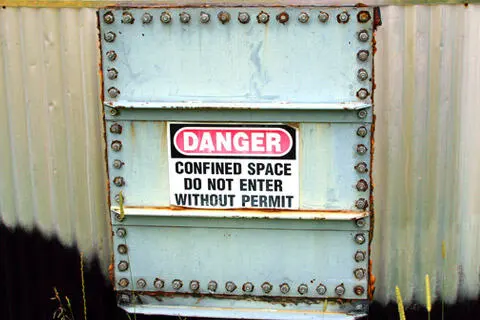
Confined Spaces Safety Standards address the health and safety of individuals in confined spaces. This includes the overall management and minimization of time spent within confined spaces, as well as the recommended preparation, training, equipment, and procedures for the various environments present therein.
This standard sets forth the minimum elements and activities of a program that defines the duties and responsibilities of construction and demolition employers to be followed while entering, exiting and working in confined spaces at normal atmospheric pressure.
This standard provides minimum safety requirements to be followed while entering, exiting and working in confined spaces at ambient atmospheric pressure.
This standard provides minimum safety requirements to be followed while entering, exiting and working in confined spaces at normal atmospheric pressure. Comparison document attempts to note the changes in the Z117.1 standard.
The primary purpose of this standard is to reduce risk from asphyxiation, poisoning, and explosions when entering confined space manure storages by specifying the positive pressure, forced ventilation requirements, including ventilation system layout, air exchange rates, and minimum ventilation times, for evacuation of contaminant gases from, and replenishment of oxygen into, empty or nearly empty covered or partially covered confined-space, on-farm, manure storages, reception tanks, agitation tanks and other similar containers that hold/contain manure prior to entry
This standard addresses the details of construction, performance, and testing of portable, mobile, and stationary electrical instruments used to provide a warning of the presence of oxygen-deficient or oxygen-enriched atmospheres.
Sets out the requirements and risk control measures for ensuring the safety of those who must enter or carry out tasks associated with a confined space. Contains Sections dealing with planning and implementing entry to a confined space. Appendices include guidance for training, risk assessment, atmospheric monitoring and sample forms and permits associated with confined space work.
Provides requirements and guidance in eliminating or minimizing the need to enter confined spaces and in avoiding hazards which may be encountered where entry to a confined space is unavoidable. Contains Sections dealing with risk identification and assessment, monitoring prior to entry, education and training as well as emergency response. Appendices provide additional guidance for cleaning and the precautions needed when undertaking hot work. A sample risk assessment form and written authority to enter are provided, as is a typical check list.
1.1 This practice covers recognized procedures necessary to protect the health and safety of workers required to enter confined spaces. These procedures are particularly applicable to entry into the confined areas associated with the use of halogenated organic solvents. 1.2 Confined areas addressed in this practice include, but are not limited to: vapor degreasers, cold cleaning tanks, storage vessels, tank cars and trucks, van trailers, ships or barges, pits or sumps, and unventilated rooms. 1.3 This practice does not necessarily address entry into all confined spaces nor does it address the decision strategy involved in requiring such entry. 1.4 Although this practice describes specific safety steps to be taken for entry into confined spaces, it is not intended to preclude the use of any additional measures that may be deemed necessary for a particular situation. 1.5 This standard does not purport to address all of the safety concerns, if any, associated with its use. It is the responsibility of the user of this standard to establish appropriate safety, health, and environmental practices and determine the applicability of regulatory limitations prior to use. 1.6 This international standard was developed in accordance with internationally recognized principles on standardization established in the Decision on Principles for the Development of International Standards, Guides and Recommendations issued by the World Trade Organization Technical Barriers to Trade (TBT) Committee.
1.1 This guide covers recommended criteria for the selection of hardwire communication systems for use in permit-required confined-space rescue operations. 1.2 This standard does not purport to address all of the safety concerns, if any, associated with its use. It is the responsibility of the user of this standard to establish appropriate safety, health, and environmental practices and determine the applicability of regulatory limitations prior to use. 1.3 This international standard was developed in accordance with internationally recognized principles on standardization established in the Decision on Principles for the Development of International Standards, Guides and Recommendations issued by the World Trade Organization Technical Barriers to Trade (TBT) Committee.
This publication identifies hazards inherent in oxygen-rich atmospheres and provides rules and recommendations for::- safe working practices where oxygen-rich atmospheres can occur; - preventing unexpected changes in the oxygen content of the atmosphere; and - limiting the effects of accidents if they occur.
This publication identifies and gives general guidance on hazards and precautions in working in confined spaces.
An oxygen-deficient atmosphere can bring about unconsciousness without warning. In as little as one or two breaths, an individual's life can be endangered by low oxygen intake. Oxygen-deficient atmospheres might not be limited to only confined spaces. They also can exist outside of a confined space opening. Table 1 describes a quantitative evaluation of the health effects and symptoms that can be expected in humans who inhale air containing less than normal levels of oxygen..
Preface This is the third edition of CSA Z1006, Management of work in confined spaces. It supersedes the previous editions published in 2016 and 2010. Changes in this edition include a) improvement of the flow and readability of the document with the inclusion of additional flowcharts and tables and restructuring of content and clauses; b) harmonization of this Standard with CSA Z45001, CAN/CSA-Z1001, and CAN/CSA-Z1002; c) elaboration on the information regarding workspace design and modification; and d) elaboration on the information regarding monitoring confined space remotely through the use of technology. CSA Group acknowledges that the development of this Standard was made possible, in part, by the financial support of federal, provincial, and territorial occupational health and safety government agencies. This Standard was prepared by the Technical Committee on Management of Confined Space Entry, under the jurisdiction of the Strategic Steering Committee on Occupational Health and Safety, and has been formally approved by the Technical Committee. This Standard has been developed in compliance with Standards Council of Canada requirements for National Standards of Canada. It has been published as a National Standard of Canada by CSA Group. Scope 1.1 General This Standard is designed to be used with related occupational or technical standards. It is intended to be referenced by other standards as the primary set of requirements for health and safety management of work in confined spaces. This Standard is designed for voluntary application in Canadian workplaces. However, the principles established in this Standard are based on best practices recognized internationally. As such, they can be applied to any workplace. Note: At the time of publication, confined space legislation differs from jurisdiction to jurisdiction in Canada. It is the user’s responsibility to determine how applicable legislative requirements relate to this Standard. 1.2 Applications This Standard specifies requirements for a) establishing and maintaining a confined space management program in accordance with OHSMS principles; b) the roles and responsibilities of management, the entry team, and the emergency response team; c) identification and designation of confined spaces; d) design and engineering of confined spaces; e) hazard identification and risk assessment relating to work in confined spaces; f) management and control of hazards and risks associated with work in confined spaces; g) personal protective equipment (PPE) and other equipment used for work in confined spaces; h) general safety procedures for confined spaces; i) remote monitoring; j) training for work in confined spaces; k) determining worker capability of performing assigned duties within confined spaces; l) emergency plans for rescuing workers in confined spaces; m) management of external service providers; and n) documentation. 1.3 Exclusions This Standard does not address safety management of a) enclosures or structures designed and constructed for continuous human occupancy; or b) underwater enclosures. Note: For underwater enclosures, see the requirements for penetration diving specified in CSA Z275.2. 1.4 Terminology In this Standard, “shall” is used to express a requirement, i.e., a provision that the user is obliged to satisfy in order to comply with the standard; “should” is used to express a recommendation or that which is advised but not required; and “may” is used to express an option or that which is permissible within the limits of the standard. Notes accompanying clauses do not include requirements or alternative requirements; the purpose of a note accompanying a clause is to separate from the text explanatory or informative material. Notes to tables and figures are considered part of the table or figure and may be written as requirements. Annexes are designated normative (mandatory) or informative (non-mandatory) to define their application. 1.5 Units of measure The values given in SI units are the units of record for the purposes of this Standard. The values given in parentheses are for information and comparison only.
This standard identifies the minimum job performance requirements (JPRs) for fire service and other emergency response personnel who perform technical rescue operations._x000D_ _x000D_ Please note: This Standard is slipping cycle due to the Emergency Response and Responder Safety Document Consolidation Plan (consolidation plan) as approved by the NFPA Standards Council. As part of the consolidation plan, this standard is slipping cycle and will open for Public Input at a later date.