Electric irons, steam cleaners, and fabric steamers standards, developed by IEC, address safety and technical specifications. These standards are intended to improve the safety measures involved for both commercial and domestic use. In terms of practicality, standards in this category deal with common hazards, encountered by all persons in and around the home. More specifically, this category does not take into account persons (including children) whose physical, sensory, or mental capabilities; or lack of experience and knowledge prevent them from using the appliance safely without supervision or instruction or children playing with the appliance.
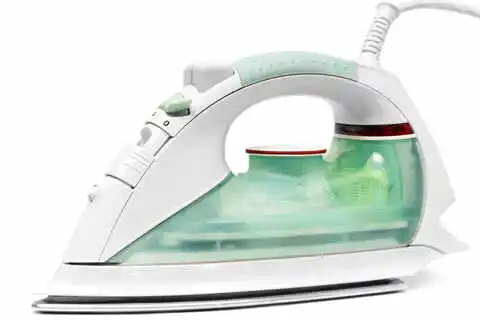
IEC 60335-2-3:2022 deals with the safety of electric dry irons and steam irons, including those with a separate water reservoir or boiler having a capacity not exceeding 5 l, for household and similar purposes, their rated voltage being not more than 250 V including direct current (DC) supplied appliances and battery-operated appliances. Appliances not intended for normal household use, but which nevertheless can be a source of danger to the public, such as appliances intended to be used by laymen in shops, in light industry and on farms, are within the scope of this standard. As far as is practicable, this standard deals with the common hazards presented by appliances, which are encountered by all persons in and around the home. However, in general, it does not take into account – persons (including children) whose physical, sensory or mental capabilities or lack of experience and knowledge prevents them from using the appliance safely without supervision or instruction; – children playing with the appliance. Attention is drawn to the fact that – for appliances intended to be used in vehicles or on board ships or aircraft, additional requirements can be necessary; – in many countries, additional requirements are specified by the national health authorities, the national authorities responsible for the protection of labour, the national authorities responsible for the safety of pressure vessels. and similar authorities. This standard does not apply to – ironers (IEC 60335-2-44); – ironing boards; – appliances designed exclusively for industrial purposes; – appliances intended to be used in locations where special conditions prevail, such as the presence of a corrosive or explosive atmosphere (dust, vapour or gas). This seventh edition cancels and replaces the sixth edition published in 2012 and Amendment 1:2015. This edition constitutes a technical revision. This edition includes the following significant technical changes with respect to the previous edition: a) alignment with IEC 60335-1:2020; b) deletion or conversion of some notes to normative text (Clause 1, 5.2, 21.101); c) addition of external accessible surface temperature limits (3.6.103, 11.3, 11.8); d) clarification of surfaces likely to be contacted when gripping a handle (22.13); e) clarification of the applicability of 30.2.2 and 30.2.3 (30.2, 30.2.3). This part 2 is to be used in conjunction with the latest edition of IEC 60335-1 and its amendments unless that edition precludes it; in that case, the latest edition that does not preclude it is used. It was established on the basis of the sixth edition (2020) of that standard.
IEC 60335-2-79:2021 is available as IEC 60335-2-79:2021 RLV which contains the International Standard and its Redline version, showing all changes of the technical content compared to the previous edition. IEC 60335-2-79:2021 deals with the safety of high-pressure cleaners without traction drive, intended for household and commercial indoor or outdoor use, having a rated pressure not less than 2,5 MPa and not exceeding 35 MPa. It also applies to steam cleaners and those parts of hot water high pressure cleaners incorporating a steam stage which have a capacity not exceeding 100 l, a rated pressure not exceeding 2,5 MPa and a product of capacity and rated pressure not exceeding 5 MPa·l. They are not equipped with a traction drive. The following power systems of the drive for the high pressure pump are covered: - mains powered motors up to a rated voltage of 250 V for single-phase machines and 480 V for other machines, - battery-operated motors, - internal combustion engines, - hydraulic or pneumatic motors. This standard does not apply to: - high pressure water jet machines having a rated pressure exceeding 35 MPa; - liquid or steam cleaners intended for domestic use (IEC 60335-2-54); - hand-held and transportable motor-operated electric tools (IEC 60745 series, IEC 61029 series, IEC 62841 series); - appliances for medical purposes (IEC 60601); - agricultural sprayers (ISO 4254-6); - non-liquid, solid abrasive cleaners; - machines designed to be part of a production process; - machines designed for use in corrosive or explosive environments (dust, vapour or gas); - machines designed for use in vehicles or on board of ships or aircraft. This fifth edition cancels and replaces the fourth edition published in 2016. It constitutes a technical revision. This edition includes the following significant technical changes with respect to the previous edition (minor changes are not listed): - editorial and technical alignment with IEC 60335-1:2020; - clarification on hand-held and battery-operated high pressure cleaners; - general editorial improvements. This part 2 is to be used in conjunction with the latest edition of IEC 60335-1 and its amendments. It was established on the basis of the sixth edition (2020) of that standard.
IEC 60335-2-85:2022 deals with the safety of electric fabric steamers intended for household and similar purposes, their rated voltage being not more than 250 V including direct current (DC) supplied appliances and battery-operated appliances. Appliances not intended for normal household use, but that nevertheless possibly pose a source of danger to the public, such as appliances intended to be used by laymen in shops, laundries and dry cleaners, are within the scope of this standard. As far as is practicable, this standard deals with the common hazards presented by appliances that are encountered by all persons in and around the home. However, in general, it does not take into account: – persons (including children) whose physical, sensory or mental capabilities; or lack of experience and knowledge prevents them from using the appliance safely without supervision or instruction; – children playing with the appliance. Attention is drawn to the fact that – for appliances intended to be used in vehicles or on board ships or aircraft, additional requirements can be necessary; – in many countries additional requirements are specified by the national health authorities, the national authorities responsible for the protection of labour and similar authorities. This standard does not apply to – appliances intended to be used in locations where special conditions prevail, such as the presence of a corrosive or explosive atmosphere (dust, vapour or gas); – electric irons (IEC 60335-2-3); – ironers (IEC 60335-2-44); – surface-cleaning appliances for household use employing liquids or steam (IEC 60335 2 54); – appliances connected to the water mains. This third edition cancels and replaces the second edition published in 2002, Amendment 1:2008 and Amendment 2:2017. This edition constitutes a technical revision. This edition includes the following significant technical changes with respect to the previous edition: a) alignment with IEC 60335-1:2020; b) conversion of some notes to normative text (Clause 1); c) introduction of pressurized fabric steamer. This part 2 is to be used in conjunction with the latest edition of IEC 60335-1 and its amendments unless that edition precludes it; in that case, the latest edition that does not preclude it is used. It was established on the basis of the sixth edition (2020) of that standard.

"Deals with the safety of electric fabric steamers intended for household and similar purposes, their rated voltage being not more than 250 V. Appliances not intended for normal household use, such as appliances to be used by laymen in laundries and dry cleaners, are within the scope of this standard. This consolidated version consists of the second edition (2002) and its amendment 1 (2008). Therefore, no need to order amendment in addition to this publication. "