Vacuum Cleaner standards are applicable to vacuums used in both wet-vac and dry-vac applications, designed for use in home, light industrial, garden, farm, and other settings. Dealing with appliances with a rated voltage of under 250V single-phase, these standards cover a wide range of vacuuming devices. Developed by IEC, these standards also address vacuum/blower combination devices, and dedicated blowers, such as those for gardens.
IEC 62885-2:2026 is applicable for measurements of the performance of mains-operated and cordless dry vacuum cleaners, including water filter vacuum cleaners for household or similar use. Table D.1 of Annex D is applicable to measurements of the performance of cordless dry vacuum cleaners for household use or under conditions similar to those in households. The results obtained under this annex are intended to be comparable to the results obtained for mains-operated vacuum cleaners. The purpose of Annex D is to specify additional requirements for measurements of cordless dry vacuum cleaners. Cleaning robots are evaluated to IEC/ASTM 62885-7. Handheld dry vacuum cleaners are excluded, except for 5.10.2 and 5.11. Measurements of the performance of mains-operated commercial dry vacuum cleaners are found in IEC 62885-8. The purpose of this document is to specify essential performance characteristics of dry vacuum cleaners which are of interest to users and to describe methods for measuring these characteristics. Due to the influence of environmental conditions, variations in time, origin of test materials and proficiency of the operator, some of the described test methods will give more reliable results when applied for comparative testing of a number of appliances at the same time, in the same laboratory and by the same operator. The methods here can be applied with modifications for surface-cleaning product types or technologies not currently covered within the scope. For safety requirements, reference is made to IEC 60335-1:2020 and IEC 60335-2-2. A recommendation on information for the consumer at the point of sale is given in Annex B. This third edition of IEC 62885-2 cancels and replaces the second edition published in 2021. This edition constitutes a technical revision. This edition includes the following significant technical changes with respect to the previous edition: a) relocation of RSB annexes to IEC TS 62885-1; b) relocation of remaining test materials, test dust, and equipment to IEC TS 62885-1; c) reduced number of test strokes from 5 double strokes to 3 double strokes except as specifically required; d) relocated requirements for cordless products, except for battery-related items, from IEC 62885-4 to a new Annex D; e) added definition and instructions for a universal dry nozzle; f) relocated air data equipment to IEC TS 62885-1, relocated formulae to 5.11, and made revisions to air data requirements; g) relocated dust re-emission equipment to IEC TS 62885-1.
IEC 62885-3:2014(E) is applicable to wet cleaning appliances for household use for carpet cleaning in or under conditions similar to those in households. This part of IEC 62885 is not applicable to steam cleaning vacuums. The purpose of this standard is to: - specify the essential performance characteristics of wet cleaning appliances being of interest to users - describe methods for measuring these characteristics and - be complementary to the methods for dry vacuum cleaners in IEC 60312-1. This first edition cancels and replaces the first edition of IEC 60312-2 published in 2010. This edition constitutes a technical revision. Click here to access to information on suppliers of test materials and details of test equipment. This information is given for the convenience of users of this International Standard and does not constitute an endorsement by IEC of the suppliers named. This information will be continuously updated.
Deals with the safety of hand held mains operated electrical garden vacuums, blower/vacuums (with or without shredding means) and garden blowers, with a rated voltage of not more than 250 V single phase.
IEC 60335-2-2:2026 deals with the safety of electric vacuum cleaners and water suction cleaning appliances for household and similar purposes, their rated voltage being not more than 250 V for single phase (AC) supplied appliances, direct current (DC) supplied appliances and battery-operated appliances and 480 V for multi-phase centrally-sited vacuum cleaners. This standard also applies to vacuum cleaners for animal grooming, centrally-sited vacuum cleaners, and automatic battery-operated cleaners. This standard also applies to spray extraction appliances in which – the pressure of the employed liquid solution does not exceed 2,5 MPa; – the product of the pressure (in MPa) and the flow of liquid solution (in litres per minute) do not exceed 100; and – the temperature of the liquid solution at the spray nozzle outlet does not exceed 60 °C. This standard also applies to vacuum cleaners and water suction cleaning appliances provided with a blowing function or inflating function. This standard also applies to motorized cleaning heads and current-carrying hoses associated with a particular vacuum cleaner or water suction cleaning appliance. Appliances not intended for normal household use, but which nevertheless can be a source of danger to the public, such as appliances intended to be used by laypersons in shops and other premises for normal housekeeping purposes, are within the scope of this standard. Examples of appliances for household use are appliances for typical housekeeping functions used in the household environment that can also be used by non-expert users for typical intermittent housekeeping functions: – in shops, schools and other similar working environments; – in farm houses; – by clients in hotels, motels and other residential type environments; – in bed and breakfast type environments. Household environments include the dwelling and its associated buildings, the garden, etc. As far as is practicable, this standard deals with the common hazards presented by appliances that are encountered by all persons in and around the home. However, in general, it does not take into account – persons (including children) whose physical, sensory or mental capabilities; or lack of experience and knowledge prevents them from using the appliance safely without supervision or instruction; – children playing with the appliance. Attention is drawn to the fact that – for appliances intended to be used in vehicles or on board ships or aircraft, additional requirements can be necessary; – in many countries, additional requirements are specified by the national health authorities, the national authorities responsible for the protection of labour, the national water supply authorities and similar authorities. This standard does not apply to – appliances intended exclusively for industrial purposes; – appliances intended to be used in locations where special conditions prevail, such as the presence of a corrosive or explosive atmosphere (dust, vapour or gas); – wet and dry vacuum cleaners, including power brush, for commercial use (IEC 60335-2-69); – floor treatment and wet scrubbing machines, including rug shampooers, for household and similar use (IEC 60335-2-10); – hand-held mains-operated garden blowers, vacuums and blower vacuums (IEC 60335 2 100, IEC 62841-4-6); – spray extraction machines for commercial use (IEC 60335-2-68); – high-pressure cleaners and steam cleaners (with a rated pressure not less than 2,5 MPa) (IEC 60335-2-79); – appliances having vacuum-pressure functions for skin care (IEC 60335-2-115). This eighth edition cancels and replaces the seventh edition published in 2019. This edition constitutes a technical revision. This edition includes the following significant technical changes with respect to the previous edition: – alignment with IEC 60335-1:2020; – conversion of some notes to normative text (Clause 1); – addition of multi-phase central vacuum cleaners to the scope (Clause 1); – addition of appliances with a blowing or inflating function to the scope (Clause 1, 3.1.9, 3.8.102, 3.8.103, 7.12); – clarification of uses similar to household use (Clause 1, 7.12); – addition of test probe 19 for accessibility of live parts (8.1.1, B.22.3, B.22.4); – relocation of the replacement in 19.9 to 19.106; – clarification that the stability test is not applicable to appliances held in the hand during normal use while also being supported by the floor unless they have a stand or rest (20.1); – allowance for a detachable power supply part in a flexible cord (6.2, 21.107, 21.108, 24.2); – clarification of remote operation requirements (22.40, 22.49, 22.51, Annex B 22.40); – addition of requirements for the supply cord of automatic battery-operated cleaners (25.7); – addition of a running overload test for brush and traction motors of automatic battery-operated cleaners (B.19.101); – clarification of requirements for docking stations (30.2); – addition of requirements for spray extraction appliances (Clause 1, 3.1.9.104, 3.5.105, 5.102, 7.12); – clarification of requirements for appliances with appliance outlets or socket-outlets (19.1, 19.107, 22.61, 25.8); – addition of requirements for appliances with reservoirs that can be overfilled (15.2). This part 2 is to be used in conjunction with the latest edition of IEC 60335-1 and its amendments unless that edition precludes it; in that case, the latest edition that does not preclude it is used. It was established on the basis of the sixth edition (2020) of that standard.
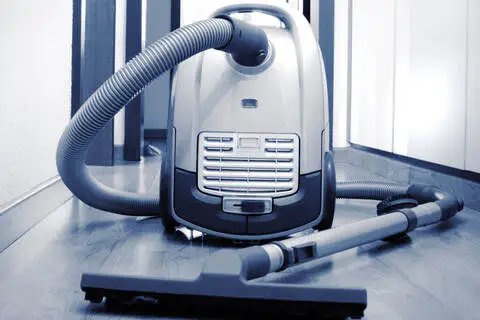
IEC 60335-2-2:2009+A1:1012 deals with the safety of electric vacuum cleaners and water-suction cleaning appliances for household and similar purposes, including vacuum cleaners for animal grooming, their rated voltage being not more than 250 V. It also applies to centrally-sited vacuum cleaners and automatic battery-powered cleaners. This standard also applies to motorized cleaning heads and current-carrying hoses associated with a particular vacuum cleaner. The principal changes in this edition as compared with the fifth edition of IEC 60335-2-2 is as follows: The text is aligned with IEC 60335-1:2001, and its amendments 1 and 2. The attention of the National Committees is drawn to the fact that equipment manufacturers and testing organizations may need a transitional period following publication of a new, amended or revised IEC publication in which to make products in accordance with the new requirements and to equip thenselves for conducting new or revised tests. It is the recommendation of the committee that the content of this publication be adopted for implementation nationally not earlier than 12 months or later than 36 months from the date of publication. Key words: Cleaning appliances, water-suction, vacuum. This publication is to be read in conjunction with IEC 60335-1:2010 . This consolidated version consists of the sixth edition (2009) and its amendment 1 (2012). Therefore, no need to order amendment in addition to this publication.
IEC 60335-2-69:2021 deals with the safety of electrical motor-operated vacuum cleaners, including back-pack vacuum cleaners, and dust extractors, for wet suction, dry suction, or wet and dry suction, intended for commercial indoor or outdoor use with or without attachments. These machines may be provided with a blowing or inflating function. The inner diameter of the dust container connector to the suction hose shall not exceed 200 mm. It also deals with the safety of centrally-sited vacuum cleaners, excluding the installation of the system. Attention is drawn to the fact that additional requirements on the safe installation of centrally-sited vacuum cleaners are not addressed by this standard but need to be taken into account. This standard applies to machines for commercial use. The following list, although not comprehensive, gives an indication of locations that are included in the scope: – public use areas such as hotels, schools, hospitals; – industrial locations, for example factories and manufacturing shops; – retail outlets, for example shops and supermarkets; – business premises, for example offices and banks; – all uses other than normal housekeeping purposes. These machines are not equipped with a traction drive. The following power systems are covered: – mains powered motors up to a rated voltage of 250 V for single-phase appliances and 480 V for other appliances, – battery-operated motors. Machines for the same intended function but equipped with a traction drive are covered by IEC 60335-2-72. This standard also applies to machines handling hazardous dust, such as asbestos, and combustible dust in other than an explosive dust atmosphere. Additional requirements for machines handling hazardous dust are given in normative Annex AA. Attention is drawn to the fact that in many countries additional requirements on hazardous substances might apply. Radioactive substances are not covered by definition of hazardous dust for the purposes of this standard. This standard does not apply to – vacuum cleaners and water-suction cleaning appliances for household use (IEC 60335-2-2); – floor treatment machines for commercial use (IEC 60335-2-67, IEC 60335-2-72); – spray extraction machines for commercial use (IEC 60335-2-68); IEC 60335-2-67 and IEC 60335-2-68 cover only machines without traction drive. – hand-held mains-operated electrical garden blowers, vacuums and blower vacuums (IEC 60335-2-100); – hand-held and transportable motor-operated electric tools (IEC 60745 series, IEC 61029 series, IEC 62841 series); – appliances for medical purposes (IEC 60601-1); – machines designed for use in corrosive environments; – machines designed for picking up liquids with a flash point below 55 °C; – machines designed for use in explosive environments (dust, vapour or gas), except those designed for use in zone 22; – machines intended to vacuum ash from fireplaces, chimneys, ovens, ashtrays and similar places of ash accumulation. This sixth edition cancels and replaces the fifth edition published in 2016. It constitutes a technical revision. This edition includes the following significant technical changes with respect to the previous edition: – editorial and technical alignment with IEC 60335-1:2020; – addition of requirements for pick-up of combustible dusts in other than an explosive dust atmosphere. This part 2 is only to be used in conjunction with the latest edition of IEC 60335-1 and its amendments. It was established on the basis of the sixth edition (2020) of that standard.