PDF Price
$775.00
ADD TO CART
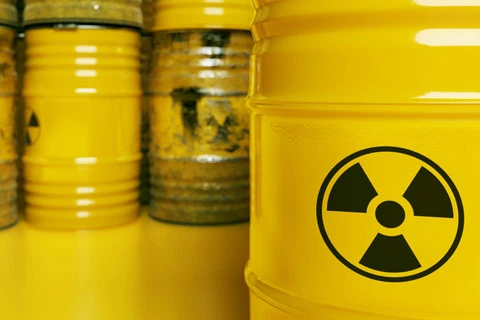
Safety Signs and Labels Standards delineate the proper design, classification, and implementation of safety signs and safety labels. The cross-industrial standardization of safety signs and labels is integral to the reduction of risks to health and safety. Safety signs and labels standards are a key part of ongoing efforts to promote safe practices throughout an exceptionally wide range of specific situations.
The ANSI/NEMA Z535 Set provides the definitions and criteria for safety colors and safety symbols to warn against hazards and avoid injury. Also included are specifications for the placement of safety signs, labels, tags, and barricade tapes. The ANSI/NEMA Z535 set also describes the five types of safety signs and regulations for the design, application, and use of safety signs in facilities and in the environment.
The Graphical Symbols - Safety Colours and Safety Signs Package provides the users with the design principles for product safety labels, safety signs in work / public places and graphical symbols for use in safety signs. The package also identifies the purpose, colors, hazard severity panel, signal words, types / layout of product safety labels and safety signs plus so much more. This collection contains the following ISO documents: ISO 3864-1:2011, ISO 3864-2:2016, ISO 3864-3:2024 and ISO 3864-4:2011. This package is reduced 20% off the individual list price.
The Z535 Safety Color Chart will bear a 2011 designation with updated and corrected information concerning ink specifications for the Z535 safety colors.
Sets forth the technical definitions, color Standards, and color tolerances for safety colors.
Regulates requirements for the design, application, and use of safety signs in facilities and in the environment through consistent visual layout. Reorganized to best describe the five types of safety signs used in facilities, the 2011 edition of this Standard is revised to better harmonize with ANSI Z535.4, ANSI Z535.5, and ANSI Z535.6.
Provides general criteria for the design, evaluation, and use of safety symbols to identify and warn against specific hazards and information to avoid personal injury.
Delivers specifications for design, application, use, and placement of safety signs and labels on a wide variety of products. A new type of product safety sign, the "safety instruction sign," was added to join the existing types of signs, hazard alerting signs, and safety notice signs, which were also more clearly defined and named in this edition. The definitions for "accident," "harm," and "incident" were refined to more clearly delineate a separation between physical injury and other safety-related issues (e.g., property damage). It was revised to correspond with ANSI Z535.2, ANSI Z535.5, ANSI Z535.6.
Discusses tag and tapes, which are used only until the identified hazard is eliminated or the hazardous operation is completed. The Z535.5-2011 edition was revised to link with ANSI Z535.2, ANSI Z545.4, and ANSI Z535.6. The Safety Instructions Tag was added in addition to the existing types of signs, hazard alerting tags, and barricade tapes, as well as safety notice tags and barricade tapes, which were more clearly defined and named in this edition. Industries (typically manufacturing and construction) that employ lockout/tagout procedures or have a need to mark an area affected by a temporary hazard will find this Standard beneficial.
Sets forth requirements for the design and location of product safety messages in collateral materials for a variety of products.
ISO 3864-1:2011 establishes the safety identification colours and design principles for safety signs and safety markings to be used in workplaces and in public areas for the purpose of accident prevention, fire protection, health hazard information and emergency evacuation. It also establishes the basic principles to be applied when developing standards containing safety signs. ISO 3864-1:2011 is applicable to all locations where safety issues related to people need to be addressed. However, it is not applicable to the signalling used for guiding rail, road, river, maritime and air traffic and, generally speaking, to those sectors subject to a regulation which may differ.

ISO 3864-2:2016 establishes additional principles to ISO 3864 1 for the design of safety labels for products, i.e. any items manufactured and offered for sale in the normal course of commerce, including but not limited to consumer products and industrial equipment. The purpose of a product safety label is to alert persons to a specific hazard and to identify how the hazard can be avoided. ISO 3864-2:2016 is applicable to all products in all industries where safety-related questions can be posed. However, it is not applicable to safety labels used - for chemicals, - for the transport of dangerous substances and preparations and - in those sectors subject to legal regulations which differ from certain provisions of this document. The design principles incorporated in this document are intended to be used by all ISO Technical Committees and anyone designing product safety labels in the development of product safety label standards for their industries or services.
This document provides principles, criteria and guidance for the design of graphical symbols for use in safety signs as defined in ISO 3864-1, and for the safety sign element of product safety labels as defined in ISO 3864-2.
ISO 3864-4:2011 establishes the colorimetric and photometric requirements and test methods for the colours of safety signs to be used in workplaces and public areas. It provides the colorimetric and photometric specifications for the named safety and contrast colours prescribed in ISO 38641. The physical requirements that safety signs have to meet are primarily related to daytime colour and normally lit environments. ISO 3864-4:2011 also includes the colorimetric requirements and test methods for safety signs and phosphorescent material which also operate in unlit environments. ISO 3864-4:2011 is applicable to all locations where safety issues related to people need to be addressed. However, it is not applicable to signalling used for guiding rail, road, river, maritime and air traffic and, generally speaking, to those sectors subject to a regulation that may differ. The colorimetric and photometric properties of retroreflective safety signs, retroreflective materials combined with fluorescent or phosphorescent materials, or luminous safety signs activated by a radioactive source are not specified in ISO 3864-4:2011.
This Standard establishes a common system to assist in identification of fluids conveyed in piping and their characteristics. The Standard describes requirements for the identification of aboveground piping used in industrial, commercial, transmission, distribution, and institutional installations, and in buildings used for public assembly.
NFPA 170 provides standard symbols used to communicate fire safety, emergency, and associated hazards information. Using easily understood uniform symbols on labels and signs provides consistency, eliminates confusion, and improves communication.
The SDS is an important resource and provides a wide range of information. Details on material identity, manufacturer information, hazard classification, emergency information, instructions on what to do if a hazardous situation has occurred, information on the prevention of hazardous situations, as well as other technical information are contained in an SDS.
This document prescribes safety signs for the purposes of accident prevention, fire protection, health hazard information and emergency evacuation. The shape and colour of each safety sign are according to ISO 3864 1 and the design of the graphical symbols is according to ISO 3864 3. This document is applicable to all locations where safety issues related to people need to be addressed. However, it is not applicable to the signalling used for guiding rail, road, river, maritime and air traffic and, in general, to those sectors subject to a regulation which may differ with regard to certain points of this document and of the ISO 3864 series. This document specifies the safety sign originals that can be scaled for reproduction and application purposes.
ISO 17398:2004 specifies requirements for a performance-related classification system for safety signs according to expected service environment, principal materials, photometric properties, means of illumination, fixing methods and surface. Performance criteria and test methods are specified in ISO 17398:2004 so that properties related to durability and expected service life can be characterized and specified at the time of the product's delivery to the purchaser. ISO 17398:2004 does not cover electrical power supplies, their components or electrically powered elements. It also does not cover properties of illuminating components, but the photometric properties for the particular types of safety signs are covered.
The purpose of this brochure is to identify Danger, Warning, and Caution Safety Labels which identify known potential hazards. It also includes Safety Label Placement Guidelines for conveyor equipment.