PDF Price
$144.00
Add to cart
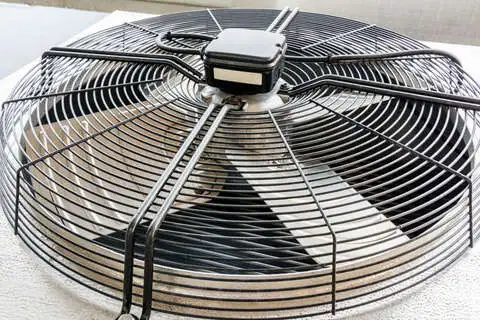
ANSI Z9 ventilation system standards cover design for ventilation systems to reduce airborne contaminants, local exhaust ventilation, spray finishing systems, abrasive blasting systems, lab ventilation, industrial exhaust, and portable ventilation systems, among others. Popular standards listed here include ANSI/ASSE Z9.1 for Ventilation and Control of Airborne Contaminants During Open-Surface Tank Operations and ANSI/AIHA/ASSE Z9.5-2012 for Laboratory Ventilation.
This standard establishes minimum control requirements and ventilation system design criteria for controlling and removing air contaminants to protect the health of personnel engaged in open-surface tank operations.
Establishes minimum requirements for the commissioning, design, specification, construction and installation of fixed industrial local exhaust ventilation (LEV) systems used for the reduction and prevention of employee exposure to harmful airborne substances in the industrial environment.
This standard is intended to help manufacturers and users protect the health of personnel from injurious effects of contact with gases, vapors, mists, dusts, powders or solvents used in, created, released or disseminated during or by spray finishing operations.
This standard applies to all operations in fixed location abrasive-blast enclosures in which an abrasive forcibly comes in contact with a surface by pneumatic or hydraulic pressure or by centrifugal force. It does not apply to steam blasting, steam cleaning or hydraulic cleaning methods in which work is done without the aid of abrasives. It also does not apply to abrasive blasting conducted outdoors (e.g., bridges, water towers) even though temporary enclosures may be built at such locations.
This standard applies to the ventilation in most laboratories and is written for all laboratory ventilation stakeholders. An emphasis is placed on those with legal responsibilities and liability for providing a safe laboratory. However, users/operators, industrial hygienists, other safety and environmental professionals will also find the standard written for their needs. The standard cannot establish strict liability in all cases but does attempt to fix accountability in many relationships that exist with its context. Please note that such relationships are defined throughout the standard and generally encompass the following: administration - occupant, employer - employee, management - staff, owner - occupant, owner - tenant, teacher - student, designer - owner, etc. This standard does not apply to the following types of laboratories, hoods or systems except as it may relate to general laboratory ventilation: animal facilities, biosafety cabinets, explosives laboratories, high containment facilities (e.g., BSL 3, BSL 4, facilities operating under “chemical surety plans,” etc.), laminar flow hoods and isolators (e.g., a clean bench for product protection, not employee protection),radioisotope laboratories, and fire, smoke or emergency response systems. General laboratory safety practices are not included except where they may relate to the ventilation system’s proper function or effectiveness.
The requirements and emission and exposure control principles described in this standard represent the minimum criteria intended (1) to protect the health of personnel engaged in and working in the vicinity of grinding, polishing and buffing operations; and (2) to control contaminants generated by those operations.
This newly updated guideline establishes the minimum criteria for the design and operation of recirculating exhaust systems used for contaminant control in the workplace. Harmful concentrations of air contaminants can be created in the work environment if done incorrectly. Possible safety problems are addressed, as are the materials and processes used to identify industrial process-generated contaminants.
This standard describes fundamental good practices related to the design, manufacture, labeling, use and application, as well as maintenance and testing of portable ventilation systems used for the control of airborne contaminants or environmental conditions.
This standard establishes minimum requirements for the commissioning, design, specification, construction, installation, management, operation, maintenance and testing of dilution ventilation systems (including demand dilution ventilation) used for the reduction, prevention and control of employee expo-sure to harmful concentrations of airborne substances in the industrial environment. he standard establishes minimum DV requirements to provide safe and healthful working conditions in industrial employee occupancies.
Hazardous materials identified or generated from the facility decommissioning process are subject to intense regulation and present significant potential liabilities. The need to improve characterization and management of these wastes is a primary driver for development of improved decommissioning strategies. Research laboratory facilities and their associated spaces pose unique decommissioning concerns because of the nature of the use of workspace. The intent of this standard is to address a decommissioning approach specifically for research laboratories that may then be applied to other types of facilities, if appropriate.
The purpose of ANSI Z9.14 is to provide a “one-stop” resource for guidance to inspect and test the performance of a BSL-3/ABSL-3 laboratory ventilation system.