PDF Price
$58.00
Add to cart
Material standards addresses floor coverings as well as water contact products and other items. Most of these standards talk about sustainability assessments of these materials.
This voluntary product standard may be used by competent assessors to determine product conformance with the criteria defined herein for environmentally and socially sustainable ceramic tiles, glass tiles, and tile installation materials. This standard is intended to assist in the selection of tile and related installation materials that satisfy broad consumer preferences and market, government, and business procurement program demands for sustainability.
IWA 19:2017 provides a global framework for the sustainable management of secondary metals. The framework includes sustainability and traceability requirements for metals recovered.
IWA 19:2017 guides economic operators of secondary metals value chains, including those engaged in the informal sector, in the efficient and credible implementation of improved recycling practices, in particular in emerging and developing economies.
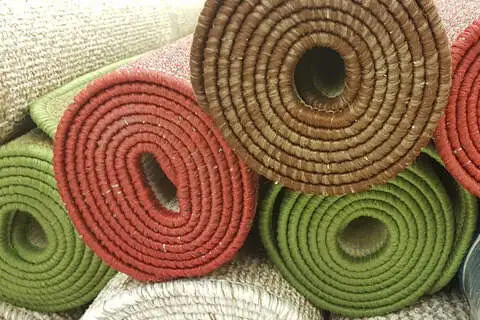
This standard is intended to enable organizations throughout the carpet supply chain to apply performance requirements to achieve sustainable attributes and demonstrate compliance with levels of achievement through quantifiable metrics. The standard is inclusive, is based on LCA principles and provides benchmarks for continuous improvement and innovation.
This standard provides pathways toward sustainability by establishing measurable criteria for multiple levels of achievement. It allows manufacturers flexibility in methods for conformance and certification. This standard assesses product characteristics in the areas of material and component inputs, water and energy use, recycling practices and social accountability.
As used in this standard, “resilient floor coverings” include, but are not limited to, vinyl tile, luxury vinyl tile, rigid core tile, solid vinyl tile, vinyl composition tile, heterogeneous and homogeneous sheet vinyl, rubber flooring, polymeric flooring, linoleum flooring, and cork flooring. Also included are flooring accessories such as wall base, moldings, and stair treads.
This sustainability standard establishes an approach to the evaluation of the sustainability of single ply roofing membranes. As used in this Standard, “Single Ply Roofing Membrane” includes, but is not limited to, EPDM (EthylenePropylene Diene Terpolymer), KEE (Ketone Ethylene Ester), PVC (Poly (Vinyl Chloride), TPO (Thermoplastic Polyolefin), and PIB (Polyisobutylene) products.
This standard establishes a consistent approach to the evaluation and determination of environmentally preferable and sustainable wallcovering manufacturing and distribution processes. It includes relevant criteria across the product life cycle from raw material extraction through manufacturing, distribution, and end-of-life management.
This Standard covers products that contact drinking water, wastewater, and recreational water and their packaging. The document includes relevant criteria across the product(s) life cycle from raw material extraction through manufacturing, use, and end-of-life management. The Standard’s primary users are intended to be water contact product(s) manufacturers interested in understanding the sustainability performance of their product(s). Independent auditors, certification bodies and environmental labeling organizations are also potential users in support of market-based environmental and sustainability claims. The output from the standard may be referenced by purchasers and consumers who wish to ensure that manufacturers are accurately declaring the sustainable nature of their products.
The purpose of this standard for photovoltaic (PV) modules and PV inverters is to establish product sustainability performance criteria and corporate performance metrics that exemplify sustainability leadership in the market.