PDF Price
N/A
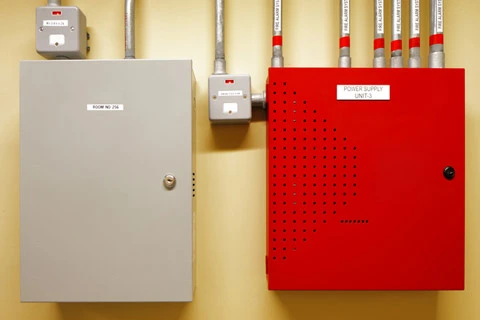
Workplace safety standards listed below represent a selection of programs, equipment, procedures and reports that would commonly apply across many occupations. The grouping is not oriented especially to the manufacture or testing of products used to protect workers. Instead these standards apply to the worker and the employer making responsible decisions for their own safety and that of their coworkers. Purchase a standard now to receive a PDF copy. Topics include safety rules, topics, precautions, and OSHA training/requirements.
NFPA 70E requirements for safe work practices to protect personnel by reducing exposure to major electrical hazards. Originally developed at OSHA's request, NFPA 70E helps companies and employees avoid workplace injuries and fatalities due to shock, electrocution, arc flash, and arc blast, and assists in complying with OSHA 1910 Subpart S and OSHA 1926 Subpart K.
Establishes the minimum elements of a program for protecting the safety and health of employees involved in construction and demolition activities. The purpose of this standard is to assist employers in their efforts to provide a safe and healthful work environment.
Preface This is the sixth edition of CSA Z462, Workplace electrical safety. It supersedes the previous editions published in 2021, 2018, 2015, 2012, and 2008. This Standard is based on NFPA 70E, Standard for Electrical Safety for the Workplace, and has been harmonized with Parts I, II, and III of the Canadian Electrical Code; CSA Z460, Control of hazardous energy — Lockout and other methods; and CSA M421, Use of electricity in mines. This revised edition of CSA Z462 has been developed by CSA Group from the original edition as promulgated by the National Fire Protection Association (NFPA). In addition to its initial source, it includes significant revisions by CSA Group. This Standard is fully the responsibility of CSA Group. The NFPA, holder of the copyright in this edition, takes no responsibility for any portion thereof. This Standard specifies requirements for and provides guidance on safety management systems, safe work procedures, and selection of personal protective equipment and other safety devices for persons exposed to hazards associated with energized electrical equipment. In addition, this Standard sets out criteria for the identification and training of qualified electrical workers and for determination of hazardous work to be performed only by those qualified individuals. By permission of the NFPA, many of the clauses, tables, and figures in this Standard have been copied from NFPA 70E. CSA Group wishes to thank the NFPA for its support throughout the development of this Standard. The following is an overview of the major revisions to the 2024 edition: a) the definition of "arc rating" has been modified to include an arc rating limit for face shields(Clause 3); b) definitions for "laser", "radiation, ionizing", "radiation, non-ionizing", and "temporary protective grounding equipment" have been added (Clause 3); c) the requirements related to an electrically safe work condition were reorganized into three clauses (Clauses 4.1.6.1, 4.1.6.2, and 4.1.6.3); d) the exception to the requirement to establish an electrically safe work condition (Clause 4.1.6.3)was revised to a single exception, i.e., when it is "not practicable" to do so, to align with Canadian occupational health and safety regulations; e) added that the requirement to verify the absence of voltage must be done "at each point of work" (Clause 4.2.5); f) added several items to the list of activities exempted from requiring an energized electrical work permit in Clause 4.3.2.3; g) Table 2, which can be used to estimate the likelihood of occurrence of an arc flash incident for ac and dc systems, was relocated to Annex F as Table F.2; h) the term "leather protectors" (as applied to gloves worn over rubber insulated gloves) has been changed to "protectors" throughout this Standard (Clauses 3, 4.3.5.6.2, 4.3.7.2.1, 4.3.7.3.7, 4.3.7.3.10, Q.4, and R.3.3, and Tables H.1 and H.2) to permit the use of protector gloves constructed of leather or materials other than leather, and a definition of "protectors" has been added to Clause 3; i) the arc flash PPE category method requirements (Clause 4.3.7.3.15 and Tables 6A and 6B) were relocated to follow Table V.1 in Annex V as Tables V.2 and V.3, respectively, and the method was revised and retitled as the "arc flash PPE selection table method"; j) a new figure was added to Annex V to provide guidance for the use of Table V.1, and several entries were added to Table V.1 to increase granularity; k) the arc flash personal protective equipment, Table 6C, has been deleted, all references to "arc flash PPE category" have been replaced with "arc flash PPE minimum arc rating", and the arc flash PPE category numbers of 1, 2, 3, 4, and 5 have been replaced in Tables V.1, V.2, and V.3 with a minimum arc rating of 4, 8, 25, 40, and 75 cal/cm2, respectively; l) the determination regarding whether a circuit can be safely re-energized after it has been de- energized by the automatic operation of a circuit protective device shall now be done by a qualified person or persons (Clause 4.3.8.13); m) energy thresholds for safety requirements related to batteries and battery rooms or battery enclosures (Clauses 6.3.1 and 6.3.2) were revised; n) information on battery risk assessment (Clause 6.3.2.2) was added to Annex F; o) added capacitor stored energy thresholds for safety-related work practices for use of lasers (Clause 6.4.2.1); p) added several categories of power electronic equipment and the associated electrical hazard thresholds (Clause 6.5); q) added new safety-related requirements for capacitors (Clause 6.7) and new information on working with capacitors (Annex W), and added the following terms used exclusively in Clause 6.7 to Clause 3 and identified these terms by the parenthetical phrase ("as applied to capacitors"):"boundary, hearing protection", "boundary, lung protection", "charge transfer", "dielectric absorption", "ground stick", "grounding, hard", "grounding, soft", "hazard, arc blast", "protector", "resistor, bleeder", "time constant", and "time, discharge"; r) added guidance on assessing the condition of maintenance of electrical equipment and systems (Clause B.5); and s) reorganized the types of electrical hazards in Annex K into two categories of shock and arc flash and added guidance regarding electrical hazards and associated injuries, including "electric shock sequela". This Standard was prepared by the Technical Committee on Workplace Electrical Safety, under the jurisdiction of the Strategic Steering Committee on Occupational Health and Safety, and has been formally approved by the Technical Committee. This Standard has been developed in compliance with Standards Council of Canada requirements for National Standards of Canada. It has been published as a National Standard of Canada by CSA Group. Scope 1.1 General This Standard specifies requirements for workplace electrical safety necessary for the practical safeguarding of workers during activities such as the installation, removal, inspection, operation, maintenance, and demolition of electric conductors and electric equipment, as well as work in proximity of energized electrical equipment. 1.2 Application While it can be applied by organizations of any type or size, this Standard does not cover a) installations in ships, watercraft other than floating buildings, railway rolling stock, aircraft, and automotive vehicles other than mobile homes and recreational vehicles; b) installations of railways for the generation, transformation, transmission, or distribution of power used exclusively for operation of rolling stock or installations used exclusively for signalling and communications; c) installations of communications equipment under the exclusive control of communications utilities located outdoors or in building spaces used exclusively for such installations; and d) installations under the exclusive control of an electric utility when such installations i) consist of service drops or service laterals, and associated metering; ii) are located in legally established easements or rights-of-way designated or recognized by public service commissions, utility commissions, or other regulatory agencies having jurisdiction for such installations; or iii) are on property owned or leased by the electric utility for communications or for metering, generation, control, transformation, transmission, or distribution of electric energy. 1.3 Suitability It is the responsibility of the users of this Standard to judge its suitability for their particular purpose (see Note 2 to the Preface). 1.4 Use with related standards and regulations This Standard is intended for use with Parts I, II, and III of the Canadian Electrical Code and other related Canadian workplace electrical safety standards (e.g., CSA M421 and CSA Z460), and should be used with such standards. In addition, users of this Standard should always refer to provincial, territorial, and federal safety regulations that have jurisdiction over their work facility, contract job site, or profession. 1.5 Organization of this Standard The requirements of this Standard are organized in three main clauses (Clauses 4 to 6) and one Annex (Annex V), as shown in Figure 1. Annexes A to U, W, and X do not specify requirements and are included for information only. 1.6 Measurements The values given in SI units are the units of record for the purposes of this Standard. The values given in parentheses are for information and comparison only. 1.7 Terminology In this Standard, "shall" is used to express a requirement, i.e., a provision that the user is obliged to satisfy in order to comply with the Standard; "should" is used to express a recommendation or that which is advised but not required; and "may" is used to express an option or that which is permissible within the limits of the Standard. Notes accompanying clauses do not include requirements or alternative requirements; the purpose of a note accompanying a clause is to separate from the text explanatory or informative material. Notes to tables and figures are considered part of the table or figure and may be written as requirements. Annexes are designated normative (mandatory) or informative (non-mandatory) to define their application.
The SDS is an important resource and provides a wide range of information. Details on material identity, manufacturer information, hazard classification, emergency information, instructions on what to do if a hazardous situation has occurred, information on the prevention of hazardous situations, as well as other technical information are contained in an SDS.
This document applies to all mobile elevating work platforms (MEWPs) intended for moving a person(s) along with their necessary tools and materials at an elevated work location. This document specifies the requirements for selection, inspection, training, maintenance, repair and safe operation of MEWPs to achieve the following objectives: a) eliminate or reduce accidents, personal injuries and property damage; b) establish criteria for selection, inspection, training, maintenance, repair and safe operation; c) help manufacturers, dealers, owners, users, operators, occupants and qualified persons to understand their responsibilities; d) establish a process for reviews to verify compliance with this document; e) provide a guide for governmental authorities desiring to formulate safety rules and regulations. In this document, MEWP classifications comprise a MEWP group (platform location in reference to tipping line) with an associated MEWP type (reference to travelling). This document is applicable to both new MEWPs put on the market and those MEWPs currently in service.
This document prescribes safety signs for the purposes of accident prevention, fire protection, health hazard information and emergency evacuation. The shape and colour of each safety sign are according to ISO 3864 1 and the design of the graphical symbols is according to ISO 3864 3. This document is applicable to all locations where safety issues related to people need to be addressed. However, it is not applicable to the signalling used for guiding rail, road, river, maritime and air traffic and, in general, to those sectors subject to a regulation which may differ with regard to certain points of this document and of the ISO 3864 series. This document specifies the safety sign originals that can be scaled for reproduction and application purposes.

The ANSI/ASSE A1264 - Safety for Workplace Surfaces Package sets provisions for establishing safe walking and working environments. It addresses floor surface characteristics, footwear traction properties, environmental factors and falling objects that may contribute to an unsafe workplace environment. This package includes ANSI/ASSE A1264.1-2017 and ANSI/ASSP A1264.2-2022.